Best Sports Illustrated Swimsuits: The Ultimate Buying Guide
Seven standout tops and bottoms compared for fit, support, fabric quality, and everyday versatility — so you can shop with confidence instead of guesswork.
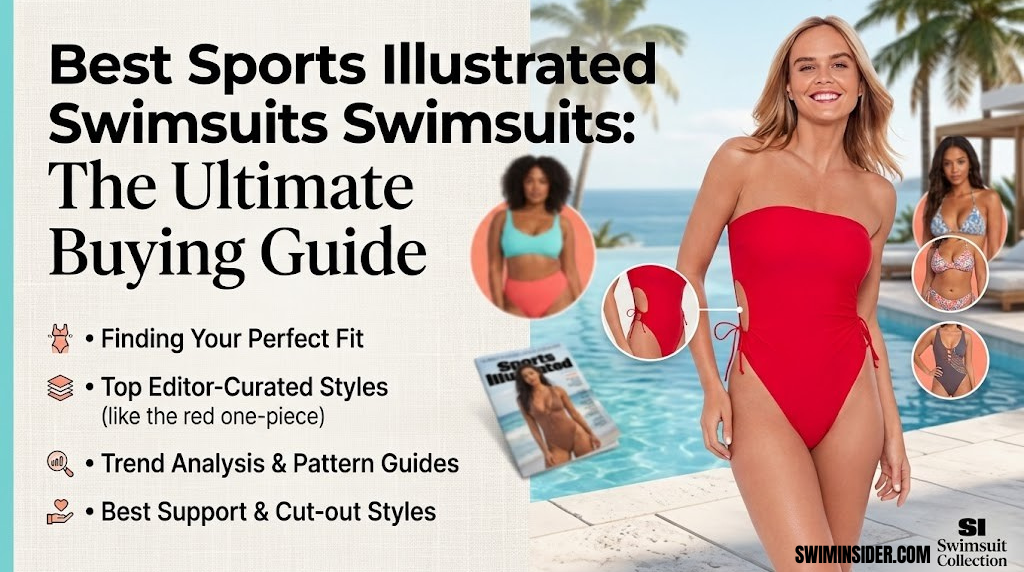

Sports Illustrated swimwear blends the brand’s magazine-era glamour with fabrics built for real pool days, not just photo shoots.
Sports Illustrated has spent decades putting swimwear front and center, so it’s no surprise the brand eventually launched its own line of suits — pieces designed to carry the same confident, magazine-ready look into everyday pool days, beach trips, and vacations. But a recognizable name doesn’t automatically mean a great fit, and swimwear shopping online is famously hit-or-miss. Necklines gape, straps dig in, and fabric that looks structured in a product photo can turn out thin and see-through once it’s wet.
This guide cuts through that guesswork. We looked closely at seven of the brand’s most popular tops and bottoms, comparing construction, coverage, adjustability, and how each piece is likely to perform across different body types and activity levels — from lounging poolside to swimming actual laps. Whether you’re after a bold strapless top for a beach vacation or a supportive underwire style for all-day wear, you’ll find a clear recommendation below, along with the practical details that matter more than a pretty thumbnail image.
If you’re still deciding between brands entirely, our best swimsuits hub rounds up every top-rated style across categories, and our dedicated best swimsuit for women guide is a good companion read if fit is your biggest concern.
One thing worth setting expectations on before diving in: no single suit in this lineup is designed to be everything to everyone. A style built for lounging poolside and one built for chasing kids through the shallow end have genuinely different priorities, and the same goes for a suit meant to photograph well versus one meant to survive a week of daily wear on vacation. Rather than pretending one “best overall” pick can satisfy every use case, this guide breaks recommendations down by scenario, so you can jump straight to whichever section matches what you’re actually shopping for — whether that’s support, coverage, versatility, or simply the most classic, easy-to-style option.
We’ll also walk through the fit logic behind each recommendation, not just the verdict, since understanding why a particular strap style or rise works for a given body type will help you make smarter calls even on pieces outside this specific lineup down the road.
What Makes Sports Illustrated Swimwear Different
Most swimwear brands fall into one of two camps: fashion-first labels that prioritize how a suit photographs, or performance-first brands that prioritize how a suit swims. Sports Illustrated swimwear sits deliberately in the middle. The silhouettes borrow from the brand’s editorial swimsuit issue heritage — high-cut legs, statement necklines, cutout details — while the fabrics and construction lean closer to what you’d expect from a suit meant to survive chlorine, sun, and repeated wear.
That middle-ground positioning shows up in a few consistent details across the lineup. Adjustable straps and ties appear on nearly every piece, which helps the suits accommodate a wider range of torso lengths and cup sizes than a single fixed-size cut would. Lining is generally doubled through the bust and seat, which matters both for opacity when wet and for how long the suit holds its shape season after season. And the color and print options tend to skew toward solids, textured knits, and classic stripes rather than fast-fashion novelty prints, which makes the pieces easier to mix, match, and rewear.
It’s worth being honest about the tradeoffs too. Because the brand’s aesthetic leans toward a bold, leg-baring cut, these suits generally offer less coverage than what you’d find in a sport-focused or modest-leaning line. If full coverage or a conservative leg line is a priority, it’s worth cross-shopping our best modest swimsuits picks alongside anything here. And if your primary use case is actual swim training rather than lounging, a dedicated chlorine-resistant suit from our best competitive swimsuits list will likely outperform any of these picks in the water.
The line’s separates-first approach is also worth calling out on its own, since it’s less common than it should be. Many swimwear brands still sell tops and bottoms exclusively as matched sets, which forces shoppers into a single size and style combination even when their top and bottom needs genuinely differ. By selling each piece independently — and sizing them independently — Sports Illustrated makes it realistic to build a small, mixable collection rather than a closet full of single-use matched suits that only work with one specific partner piece.
How We Chose These Picks
Rather than ranking suits purely on star ratings, we evaluated each piece against four practical criteria that tend to predict real-world satisfaction: fit adjustability, fabric and lining quality, support level relative to the style’s intended use, and versatility — meaning how easily a top or bottom could be mixed with other pieces rather than locking a shopper into one fixed set.
We also paid close attention to construction details that are easy to miss in a thumbnail photo: whether straps are adjustable or fixed, whether a top includes molded cups or removable padding, how a bottom’s rise is described (hipster, standard, or high-waisted), and whether closures use ties, clasps, or pull-on elastic. These small choices end up mattering far more than color or print once a suit is actually being worn.
Finally, we grouped the seven picks by best use case rather than forcing them into a single ranked list, since “best overall” rarely means the same thing to two different shoppers. A parent chasing toddlers around a pool has different priorities than someone packing for a resort vacation, and this guide is built to serve both.
We also intentionally avoided leaning on marketing copy or listing photos alone as evidence of quality. A suit can look flawless in a styled product shot and still disappoint once it’s actually wet and being worn for hours — which is exactly the gap this guide is meant to close by focusing on the construction choices that hold up regardless of how good the photography is.
Quick Comparison Table
If you only have a minute, this table gives you the shorthand version of every pick below, including who each style tends to suit best.
| Style | Best For | Support Level | Coverage | Adjustability |
|---|---|---|---|---|
| Strapless Adjustable Cutout Top | Best overall / vacation | Medium | Moderate | High |
| Classic Bikini Top | Everyday poolside wear | Medium | Moderate | Medium |
| Hipster Bottom | Low-rise comfort | N/A | Moderate | Medium |
| Bikini Bottom | Classic mix-and-match | N/A | Lower | Medium |
| Multiway Convertible Top | Versatile styling | Medium | Moderate | High |
| Shirred Midkini | Extra tummy coverage | Light-Medium | Higher | Medium |
| Underwire Top | Fuller-bust support | High | Moderate | High |
Notice a theme: nearly every top on this list favors adjustability over a single fixed fit, which is one of the more consistent strengths of the Sports Illustrated line as a whole. That’s especially useful if you’re shopping without the ability to try suits on first, since a few extra inches of strap or tie length can be the difference between a suit that fits and one that gets returned.
Sports Illustrated Swimwear vs Other Popular Brands
It helps to know where a brand sits relative to its competitors before committing to a full outfit. Broadly, swimwear brands cluster into three categories: fashion-forward labels built around trend cycles, athletic brands built around chlorine resistance and competitive performance, and mid-market brands — where Sports Illustrated lands — that try to balance style with everyday durability.
Compared to fast-fashion swimwear, the difference shows up most in the lining and strap hardware. Cheaper triangle tops often use single-layer fabric that turns sheer when wet and thin ties that stretch out within a season. The Sports Illustrated pieces reviewed here use doubled lining through the bust and seat and generally sturdier adjustable hardware, which is a meaningful upgrade even though the price point isn’t dramatically higher.
Compared to true athletic or competitive brands, the tradeoff runs the other direction. Dedicated swim-training suits use tightly woven, chlorine-resistant fabrics designed to survive daily pool laps for months, and they typically prioritize a snug, low-drag fit over adjustable straps or cutout styling. None of the seven picks in this guide are meant to replace that kind of suit — if lap swimming several times a week is the primary use case, a dedicated training suit from our best competitive swimsuits list will hold up noticeably better over time.
Where Sports Illustrated swimwear tends to win outright is in the middle ground: suits that need to look put-together for a weekend at the pool or a beach vacation, hold up to occasional swimming and sun exposure, and still be comfortable enough to wear all day without constant readjusting. If that middle-ground use case matches how you actually plan to wear a suit, this lineup is a strong fit; if your needs skew more toward one extreme or the other, it’s worth cross-shopping the more specialized guides linked throughout this article.
Price is another area worth a quick mention, since it factors into how brands position themselves. Mid-market brands like this one typically sit well below designer swimwear pricing while still costing more than the cheapest fast-fashion options, and that middle pricing tends to track with the middle-ground construction quality described above — better lining and hardware than the cheapest suits, without the premium fabric technology found in higher-end performance or designer lines. Knowing that positioning up front helps set realistic expectations rather than comparing these suits directly against either extreme.
Best Overall: Strapless Adjustable Cutout Top

This strapless top earns the top spot because it solves the two biggest complaints people have with strapless swimwear: it stays put, and it doesn’t flatten the bust. The adjustable band and interior support work together to hold the top in place through waves, pool ladders, and normal movement, while the cutout detailing keeps the design from feeling plain.
The strapless cut also makes this one of the more versatile pieces in the lineup, since it eliminates tan-line strap marks and pairs cleanly with nearly any bottom, including the hipster and classic bikini bottoms covered later in this guide.
Pros
- Adjustable band for a more secure, custom fit
- Stays in place during normal swimming and movement
- No strap tan lines
- Flattering cutout detail without being overly revealing
Cons
- Strapless styles generally offer less support for very full busts
- Sizing runs slightly small per common feedback — consider sizing up
For shoppers who specifically want a top that plays well with multiple bottoms, this pairs especially naturally with the hipster and classic bikini bottom picks below, giving you two or three complete outfit combinations from a single top.
Who it’s best for: anyone packing for a warm-weather trip who wants one statement piece that photographs well without sacrificing hold. It’s also a smart pick if you’re specifically trying to avoid strap tan lines heading into an event where you’ll be changing into other clothing later the same day, since a strapless top leaves your shoulders free of visible lines.
Sports Illustrated Strapless Adjustable Cutout Top — our top overall pick for fit, hold, and versatility.
Check Price on AmazonBest Classic Silhouette: Standard Bikini Top

Not every suit needs to make a statement, and this classic top is proof that a well-executed basic still earns its place in a rotation. The triangle-style cut is straightforward, the strap adjustability is generous, and the fabric has enough structure to avoid the shapeless look that cheaper triangle tops sometimes fall into once wet.
It’s the piece we’d point to first for anyone building a swimwear collection from scratch, since a clean, adjustable classic top is the foundation everything else gets layered onto — cover-ups, complementary bottoms, even under a rash guard for extra sun coverage.
Pros
- Timeless, easy-to-style silhouette
- Fully adjustable ties for a custom fit
- Holds shape well after repeated wear and washing
- Wide range of solid colorways
Cons
- Triangle cut offers minimal built-in support
- Tie closures can loosen during very active swimming
Who it’s best for: first-time buyers of the brand, or anyone who wants a foundation piece they’ll actually wear year after year rather than a trend-driven print that feels dated after one season. It’s also the top we’d recommend if you plan to layer a rash guard over it occasionally, since the simpler cut sits smoothly underneath additional layers.
Sports Illustrated Classic Standard Top — a dependable, easy-to-style basic.
Check Price on AmazonBest Hipster Bottom for Low-Rise Comfort

The hipster cut sits lower on the waist than a standard bikini bottom, which makes it a favorite for anyone who finds high-rise or standard-rise bottoms digging in when seated or bending. The wider side panels also mean the fit is more forgiving through the hip than a thinner-strap bikini bottom, without sacrificing the leg-lengthening high-cut line the brand is known for.
Because the rise sits lower, this bottom pairs especially well with slightly cropped cover-ups and high-waisted bottoms are worth avoiding if you’re specifically trying to match this silhouette — the two rises read as mismatched when paired.
Pros
- Comfortable, low-rise fit that doesn’t dig in
- Wider side coverage than a thin-strap bottom
- Flattering high-cut leg line
- Pairs well with most tops in the lineup
Cons
- Lower rise means less tummy coverage
- Not ideal for very active water sports where a snugger fit is preferred
Who it’s best for: anyone who has previously found standard or high-waisted bottoms uncomfortable when sitting for long stretches — at a pool bar, in a lounge chair, or in a car on the way to the beach. The lower rise also tends to suit shorter torsos particularly well, since it avoids the slightly squeezed look a higher rise can create on a shorter frame.
Sports Illustrated Standard Hipster Bottom — the comfort pick for everyday lounging.
Check Price on AmazonBest Everyday Bikini Bottom

This standard bikini bottom is the most straightforward option in the lineup, and that simplicity is exactly the point. The side coverage sits in the middle between the hipster and a more minimal cut, making it the safest choice if you’re unsure which rise or coverage level suits your preference and don’t want to gamble on a more extreme silhouette.
It’s also the bottom we’d recommend as a second or third piece to mix in with the tops above, since the classic proportions won’t clash visually with either the strapless top’s cutouts or the classic top’s simpler lines.
Pros
- Balanced, universally flattering coverage
- Mixes and matches easily with other tops
- Adjustable side ties for a customized fit
Cons
- Less distinctive than the hipster or high-waisted options
- Minimal rear coverage compared to the shirred midkini bottom
Who it’s best for: shoppers who want one reliable, no-surprises bottom to build a small collection of tops around, or anyone replacing a worn-out suit who already knows they liked a traditional bikini cut and doesn’t want to relearn a new fit.
Sports Illustrated Standard Bikini Bottom — the easy, mix-and-match staple.
Check Price on AmazonBest Convertible Multiway Top for Versatile Styling

If you only want to travel with one swim top, this is the one to pack. The long, adjustable straps can be reconfigured into several wearing styles — including halter, crossback, and one-shoulder variations — which effectively turns a single top into three or four different looks depending on how you tie it.
That versatility comes with a slightly steeper learning curve than the fixed-strap tops above; expect a few minutes of trial and error the first time you try a new configuration. Once you land on a preferred tie, though, it’s easy to repeat.
Pros
- Multiple wearing styles from one top
- Great for travel and packing light
- Long straps accommodate a wide range of torso lengths
Cons
- Takes some practice to tie configurations securely
- Long straps require tucking away during active swimming
Who it’s best for: frequent travelers and anyone who packs light, since this single top can realistically replace two or three fixed-style tops in a suitcase. It’s also a good option for shoulder or strap-related discomfort, since you can reposition the tie configuration to avoid pressure points that a fixed-strap top can’t adjust around.
Sports Illustrated Multiway Convertible Top — one top, several ways to wear it.
Check Price on AmazonBest Shirred Midkini for Extra Tummy Coverage

The midkini cut extends further down the torso than a standard bikini top, and the shirred (ruched) fabric detailing does double duty — it adds texture to the design while also gently gathering the fabric in a way that skims rather than clings. This makes it the pick we’d recommend most often to anyone who wants the two-piece silhouette without a fully exposed midsection.
It also happens to be one of the more comfortable options for long days poolside, since the extended coverage means less readjusting when sitting, reaching, or playing in the water with kids.
Pros
- Extended coverage without switching to a full one-piece
- Ruched fabric flatters and skims the midsection
- Comfortable for extended wear
Cons
- Less skin exposure than traditional bikini styles, which won’t suit everyone’s preference
- Slightly bulkier under fitted cover-ups
If moderate coverage on top appeals to you but you’d still like more structured support underneath, our best tankini swimsuits guide covers styles built specifically around that longer-line silhouette.
Who it’s best for: anyone easing into two-piece swimwear after primarily wearing one-pieces, or parents who want to move comfortably in and out of the water without constantly tugging a shorter top back into place. It’s also a strong postpartum option for those seeking gentle midsection coverage without full compression.
Sports Illustrated Shirred Midkini Top — extra coverage, still two-piece.
Check Price on AmazonBest Underwire Top for Fuller-Bust Support

Underwire is the one construction detail that consistently separates swimwear built for support from swimwear built purely for style, and this top is the clearest example of that in the lineup. The wire sits along the base of the cup, lifting and defining without the padding-heavy look some underwire suits fall into.
This is the top we’d point fuller-busted shoppers toward first, since the combination of underwire and adjustable straps addresses the two most common fit complaints — lack of lift and straps that dig in or slip — at the same time.
Pros
- Underwire construction adds real lift and structure
- Best support level of any top in this lineup
- Wide, adjustable straps reduce digging and slipping
Cons
- Underwire can feel rigid to swimmers who prefer a soft-cup fit
- Not the most packable option for travel
Who it’s best for: anyone who has previously found soft-cup or triangle tops lacking in support during active days — swimming, playing beach volleyball, or simply walking around a resort all day. The structured cup also tends to hold its shape better over a full day of wear than unlined styles, which sag more visibly by late afternoon.
Sports Illustrated Underwire Top — the pick for real, all-day support.
Check Price on AmazonHow to Choose the Right Fit
Buying swimwear online without a fitting room means leaning more heavily on measurements and construction details than on the product photo alone. A few practical checkpoints will save you from a return.
It also helps to think about fit in terms of how you’ll actually spend time in the suit, not just how it looks standing still. A suit that fits perfectly for a posed photo can feel completely different once you’re reaching for a pool float, climbing out of the water on a ladder, or bending down to grab a towel. Testing a new suit at home first — trying a few natural movements in front of a mirror before it ever gets wet — is one of the simplest ways to catch fit issues before they become a problem on an actual pool day.
Start With Strap and Tie Length, Not Just Cup Size
Because most of these tops rely on adjustable straps or ties rather than fixed bands, your torso length matters as much as your cup size. If you’re taller than average or have a longer torso, check the listed strap or tie length before assuming a size will work — a top with generous adjustability will accommodate more variation than one with short, fixed ties.
Match Rise to Comfort, Not Just Trend
High-cut leg lines are the brand’s signature look, but “high-cut” and “rise” are two separate measurements. A bottom can have a high-cut leg while still sitting low on the waist (like the hipster pick above) or high on the waist. If you know you’re uncomfortable with bottoms that sit low when seated, prioritize rise over leg-line style.
Consider Support Separately From Coverage
It’s a common mistake to assume more fabric automatically means more support. The midkini top offers more coverage than the classic triangle top, but the underwire top offers meaningfully more support than either, regardless of how much skin it shows. If lift and hold matter more to you than coverage, prioritize construction details like underwire and molded cups over the amount of fabric.
Buy Tops and Bottoms Separately When Sizes Differ
One underrated advantage of shopping a mix-and-match line like this one is that you’re not locked into buying a matched set. If your top and bottom sizes differ — which is extremely common — take advantage of separate sizing rather than compromising on one piece to keep a matching set.
Check Fabric Weight Before You Buy
Fabric weight is rarely listed prominently, but it’s one of the better predictors of how a suit will hold up over a season. Lighter, thinner fabrics dry faster and pack smaller, which is great for travel, but they also tend to show more wear after repeated chlorine exposure. Heavier, more structured fabric — like what’s used in the underwire top — holds its shape longer but takes more time to dry between wears. Neither is objectively better; the right choice depends on how often you’ll be washing and re-wearing the same piece within a short window.
Set a Realistic Budget for Replacement, Not Just Purchase
Because swimwear elastic degrades with use regardless of brand or price point, it’s worth thinking about these suits as pieces you’ll likely replace every season or two with regular wear, rather than a one-time purchase. Budgeting for two or three suits in rotation, as mentioned in the care section below, tends to work out more cost-effective over time than buying one suit and wearing it daily until the elastic gives out.
For a broader look at fit considerations across brands, not just this one, our best two-piece swimsuits guide and best one-piece swimsuits roundup are both useful next reads, especially if you’re still deciding between silhouettes entirely. Shoppers who need extended sizing should also check our best plus size swimsuits guide, since fit and support recommendations shift meaningfully across size ranges. And if you’re shopping for a partner rather than yourself, our best swimsuit for men guide covers the men’s side of the category.
Caring for Your Sports Illustrated Swimsuit
Even a well-constructed suit degrades quickly under the wrong care routine. Chlorine, sunscreen oils, and hot dryer cycles are the three biggest culprits behind fading, stretched-out elastic, and thinning fabric — and all three are avoidable with a slightly more deliberate routine.
Rinse Immediately After Wearing
Chlorine and salt water both continue breaking down spandex fibers even after you’ve left the pool or ocean, so a quick rinse in cool fresh water as soon as possible slows that degradation significantly. Leaving a wet suit balled up in a bag for hours is one of the fastest ways to shorten its lifespan.
Hand Wash Instead of Machine Wash
A gentle hand wash in cool water with a mild detergent will preserve elastic and color far longer than a washing machine cycle, which can stretch straps and abrade shirred or ruched fabric detailing like the midkini top’s texture.
Skip the Dryer Entirely
Heat is elastic’s biggest enemy. Lay suits flat on a towel out of direct sunlight rather than tumble drying or hang-drying in full sun, both of which accelerate fading and elastic breakdown over time.
Rotate Between Two Suits When Possible
Elastic fibers recover their shape better when given rest between wears. If you swim frequently, owning two suits in rotation — which this mix-and-match line makes easy and affordable — will noticeably extend the life of each piece compared to wearing a single suit daily.
Watch for Sunscreen Buildup, Not Just Chlorine
Sunscreen oils are an underrated cause of fabric breakdown, since they can leave residue that traps heat against the fibers and accelerates elastic fatigue even on days you never go near a pool. A quick rinse after sunscreen application — even on a beach day without swimming — helps prevent that buildup from settling into the fabric long-term.
Common Mistakes to Avoid When Buying Swim Separates
A handful of avoidable mistakes account for most swimwear returns and disappointments, and they’re worth calling out directly since they apply well beyond this specific brand.
Assuming One Size Applies to Both Pieces
It’s tempting to buy a top and bottom in the same labeled size out of convenience, but cup size and hip size rarely scale together in a fixed ratio. Treat top and bottom sizing as two separate decisions, and don’t hesitate to order different sizes in each if that’s what your measurements suggest.
Ignoring Strap and Tie Length in the Product Details
Photos rarely convey how long a tie or strap actually is, and that length determines how much real adjustability you’ll have. Before buying, check the listed dimensions rather than assuming “adjustable” means it will fit any torso length comfortably.
Choosing Coverage Level Based on Trend Rather Than Comfort
A high-cut leg line looks striking in photos, but if you know from past experience that low-rise or high-cut styles ride up uncomfortably for your body, buying based on trend rather than your own known comfort preferences is one of the most common regret purchases in swimwear. Prioritize what you know works for you over what looks best in a flat-lay photo.
Overlooking Return Policies on Final-Sale Swimwear
Because of hygiene concerns, swimwear return policies are often more restrictive than other apparel categories. Always confirm whether a listing is final sale before buying, particularly if you’re unsure about sizing and might need to exchange rather than commit to a single size.
Buying for an Upcoming Trip Without a Backup Timeline
Ordering a single suit right before a trip leaves no buffer if it doesn’t fit as expected. Where possible, order at least a week or two ahead of travel so there’s time to exchange a size or try a different style if the first pick doesn’t work out — a much less stressful process than discovering a fit issue the morning of departure.
Styling Tips: Getting More Wear Out of Each Piece
Because this lineup leans heavily on solid colors and classic proportions rather than seasonal prints, each piece has a longer realistic styling life than trend-driven swimwear typically does. A few small styling choices can stretch that versatility even further.
Layer Under a Sheer Cover-Up for Transitional Wear
The strapless and classic tops both work well under a lightweight sheer cover-up for walking from pool to restaurant without a full outfit change. The simpler silhouettes read as intentional rather than swim-specific once layered, which isn’t always true of busier printed suits.
Use the Multiway Top’s Configurations to Match Different Necklines
Since the multiway top can be tied in several configurations, it’s worth matching the tie style to whatever cover-up or dress you’re pairing it with. A halter configuration works best under a scoop-neck cover-up, while a crossback tie stays hidden under a wider strapped dress.
Mix Metallics and Textures Sparingly
If you own multiple pieces from this lineup, resist the urge to combine every textured or shirred detail into one outfit. Pairing one textured piece — like the shirred midkini — with one simpler piece, like the classic bikini bottom, tends to look more intentional than combining two heavily detailed pieces at once.
Rotate Cover-Ups Rather Than Suits for a Fresh Look
Because the suits themselves are built around neutral, reusable basics, the easiest way to keep an outfit feeling new without buying additional swimwear is to rotate cover-ups, sarongs, or accessories instead. This also happens to be the more budget-friendly approach, since cover-ups are generally less expensive to replace seasonally than swimwear.
None of these styling choices require buying more swimwear than you actually need — the goal is getting more mileage out of a small, well-chosen set of pieces rather than accumulating suits that only work in one specific combination. A handful of thoughtfully chosen separates, cared for properly and mixed intentionally, will generally outperform a closet full of one-off matched sets over the course of a full swim season.
Frequently Asked Questions
Do Sports Illustrated swimsuits run true to size?
Most pieces run close to true to size, though several tops — particularly the strapless style — tend to run slightly small based on common shopper feedback. When in between sizes, sizing up is generally the safer choice, especially since adjustable straps and ties can take up any resulting slack.
Can I mix and match different tops and bottoms from the line?
Yes. The line is designed around separates rather than fixed sets, and most solid-colored pieces coordinate easily. Pairing the strapless top with either the hipster or standard bikini bottom is one of the more popular combinations for exactly this reason.
Which style offers the most support for a fuller bust?
The underwire top offers the most structured support in this lineup, thanks to its wired cup construction and wide adjustable straps. Shoppers who need lift and hold above all else should prioritize this style over the strapless or triangle-cut options.
Are these swimsuits good for swimming laps or just lounging?
They’re better suited to recreational swimming, sunbathing, and vacation wear than serious lap training. Tie closures and cutout details, while flattering, aren’t built to withstand the friction and repetitive motion of competitive swimming the way a dedicated training suit is.
What’s the difference between a hipster and a standard bikini bottom?
A hipster bottom sits lower on the waist and typically has wider side coverage, while a standard bikini bottom sits at a more traditional mid-rise with narrower sides. The hipster tends to feel more comfortable when seated, while the standard cut offers a slightly more classic look.
How do I prevent these suits from fading in the pool?
Rinse the suit in fresh water immediately after swimming, avoid prolonged direct sun exposure while wet, and skip the dryer. Chlorine and heat are the two biggest causes of premature fading, and both are largely avoidable with a quick post-swim rinse and air drying.
Is the shirred midkini top good for hiding a tummy?
The shirred midkini offers noticeably more coverage than the brand’s other tops and uses ruched fabric that skims rather than clings, making it a solid choice for anyone who wants extra midsection coverage without switching to a full one-piece.
Can the multiway convertible top really be worn multiple ways?
Yes, though it takes a bit of practice. The long adjustable straps can be tied into several configurations, including halter and crossback styles, which is especially useful for travelers who want to pack fewer pieces without sacrificing outfit variety.
Do these suits work well for plus-size shoppers?
The adjustable straps and ties across most of the lineup help accommodate a range of sizes, but for extended sizing needs specifically, it’s worth cross-referencing our best plus size swimsuits guide alongside these picks to compare fit and support across more brands.
What should I pair with these swimsuits for sun protection?
A lightweight cover-up is the easiest way to add coverage between swim sessions without overheating. Our best swimsuit cover-ups guide has recommendations that pair well with both the bolder cutout styles and the more classic pieces in this lineup.
Which top pairs best with the shirred midkini bottom for balanced coverage?
Because the midkini top already adds coverage, pairing it with the standard bikini bottom rather than the higher-coverage hipster keeps the overall silhouette balanced rather than overly conservative. It’s a simple way to control how much coverage the full outfit ends up providing.
How long do these swimsuits typically last with regular use?
With proper care — rinsing after each wear, hand washing, and air drying away from direct heat — most pieces in this lineup can reasonably be expected to hold their shape and color for a full season or more of regular wear. Rotating between two suits rather than wearing one daily will typically extend that lifespan further.
Final Verdict
There isn’t a single “best” Sports Illustrated swimsuit, because the right pick depends entirely on what you need it to do. If you want one top that does the most work, the strapless adjustable cutout top is the safest, most flattering all-rounder. If support is your top priority, skip straight to the underwire top — it’s the clear standout for lift and hold. And if you’re building a small rotating collection rather than a single outfit, the classic top and standard bikini bottom are the two easiest pieces to mix into everything else.
Whichever piece you choose, the adjustability built into nearly every style in this lineup means you have more room to fine-tune fit after purchase than most swimwear brands allow — so don’t be afraid to size up slightly and adjust down rather than the reverse.
It’s also worth remembering that swimwear shopping rarely gets solved in a single purchase, and that’s fine. Most people land on their preferred fit and style after trying a couple of pieces and paying attention to what actually feels comfortable through a full day of wear rather than just a five-minute try-on. Treat this guide as a starting point rather than a final answer — if the strapless top doesn’t hold up the way you’d hoped, the underwire style is right there as a more structured alternative, and if the standard bikini bottom feels a touch too minimal, the hipster cut solves that specific complaint without requiring a completely different brand.
Given how affordable it is to buy separates individually, there’s little downside to picking up two complementary pieces rather than committing to a single matched set right away — you’ll get a clearer sense of what actually works for your body after a season of real wear than any review, including this one, can fully predict on its own.
For more comparisons across the wider swimwear market, visit the best swimsuits hub to keep exploring.
Shop Our Top Pick on Amazon