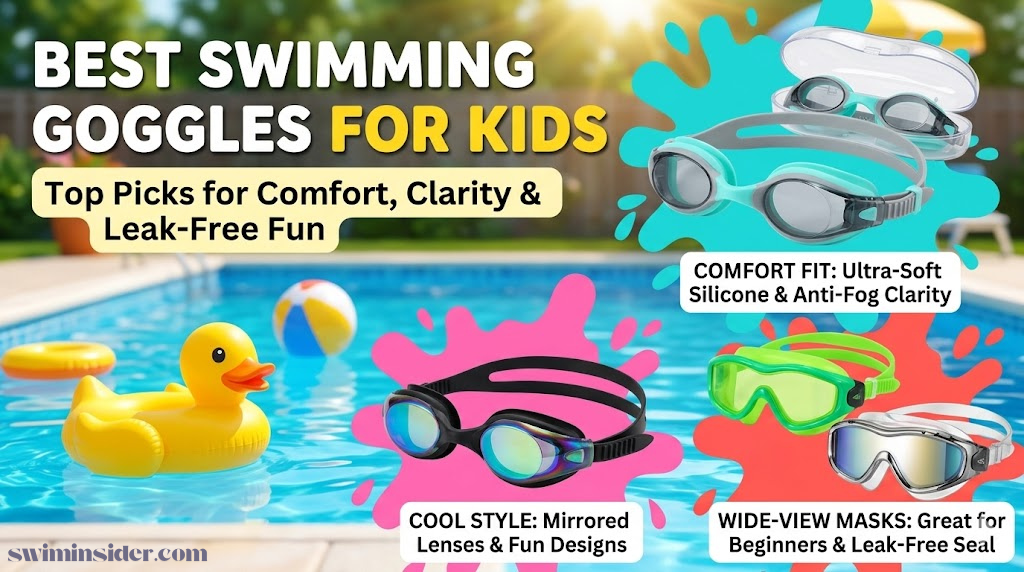
Best Swimming Goggles for Kids: Top Picks for Comfort, Clarity & Leak-Free Fun
Every parent who has stood at the pool deck watching their child tug at leaking, fogging, or pinching goggles knows the frustration. Swimming should be joyful. The right pair of kids’ swim goggles does something remarkable — it disappears. Your child stops thinking about equipment and starts thinking about dive-bombing off the step, practicing their freestyle, or chasing their friends in a game of sharks and minnows. The wrong pair, by contrast, becomes a constant negotiation: just wear them a little longer, I promise they’ll stop hurting.
The market for children’s swim goggles is genuinely crowded. There are budget pairs that collapse the first week, premium pairs sized for competitive junior swimmers, novelty goggles shaped like cartoon animals, and a vast middle ground of competent, practical options that most kids will be perfectly happy wearing to swim lessons on Tuesday mornings. In this guide, we’ve cut through all of it to give you a clear, honest picture of what to buy — and just as importantly, why.
We’ve organized this guide around a simple principle: the best goggle is the one your child will actually wear. That means comfort and fit first, optical clarity second, durability third, and novelty factor last. If the goggles are cool-looking but leave red rings around your eight-year-old’s eyes, they aren’t the best goggles — regardless of what the packaging claims.
Whether you’re buying for a toddler taking their first splash lessons, a recreational swimmer who hits the pool a few times each summer, a kid enrolled in weekly swim team practice, or a young competitive swimmer looking for a performance edge, this guide has a specific recommendation for you. We cover lens types, seal materials, strap adjustment systems, UV protection ratings, anti-fog technology, and the age-by-age breakdown that parents of multiple kids especially appreciate.
If you’re also researching goggles for other family members, our comprehensive guide to the best swimming goggles overall covers all ages and use cases. For adults specifically, check out our roundup of the best swimming goggles for women and for younger swimmers just starting out, our best swimming goggles for beginners guide is a great companion to this one.
Quick Picks: Best Kids’ Swimming Goggles
Why the Right Swim Goggles Matter for Kids
Swimming is one of the most complete forms of physical activity a child can do. It develops cardiovascular fitness, full-body coordination, breathing control, spatial awareness, and — perhaps most importantly in the early years — confidence in the water. But many children resist putting their heads underwater, and a significant proportion of that resistance traces back to eye discomfort. Chlorine stings. Natural water can be murky. UV glare from sun-drenched outdoor pools is genuinely uncomfortable. Goggles solve all of these problems simultaneously, and they solve something else too: they make underwater look like a different world. Kids who get clear, fog-free vision through a watertight seal tend to become fascinated with what’s below the surface. That fascination fuels the practice that builds skill.
From a physiological standpoint, children’s eyes are more sensitive to chemical irritants than adult eyes. The tear film in young eyes is thinner, the corneal epithelium is more permeable, and repeated exposure to chlorinated or treated water without protection can cause a condition called chemical conjunctivitis — essentially a chemical burn of the outer eye surface. Symptoms include redness, itching, swelling, and blurred vision. While a single swim session rarely causes lasting damage, children swimming frequently without eye protection are exposing themselves to cumulative irritant load that can affect comfort and clarity of vision over a season. Good goggles create a complete physical barrier between the water and the eye.
UV protection is a secondary but important consideration, especially for children swimming outdoors. A significant portion of outdoor UV exposure occurs reflected off water surfaces, which is more damaging per unit time than direct sun exposure because the eyes are often unprotected by natural shade. Kids’ swim goggles with a UVA/UVB coating or tinted lenses rated to block 99–100% of UV rays are strongly preferable for outdoor pool use, lake swimming, or beach days. We flag UV protection status for each product in our reviews below.
Finally, goggles have an underrated role in water confidence and skill development. Children who can see clearly underwater learn to self-correct their stroke mechanics earlier, engage more confidently with underwater games that build breath control, and participate more fully in structured swim lessons. Swim instructors consistently report that students in well-fitting, clear goggles progress faster through foundational skills than those constantly adjusting uncomfortable equipment.
The 7 Best Swimming Goggles for Kids — Reviewed
Below you’ll find our detailed assessments of each recommended pair. We’ve evaluated fit range, seal quality, optical clarity, ease of adjustment, anti-fog longevity, UV protection, strap system, and overall durability. Age recommendations are based on both manufacturer guidance and typical facial geometry at each life stage.
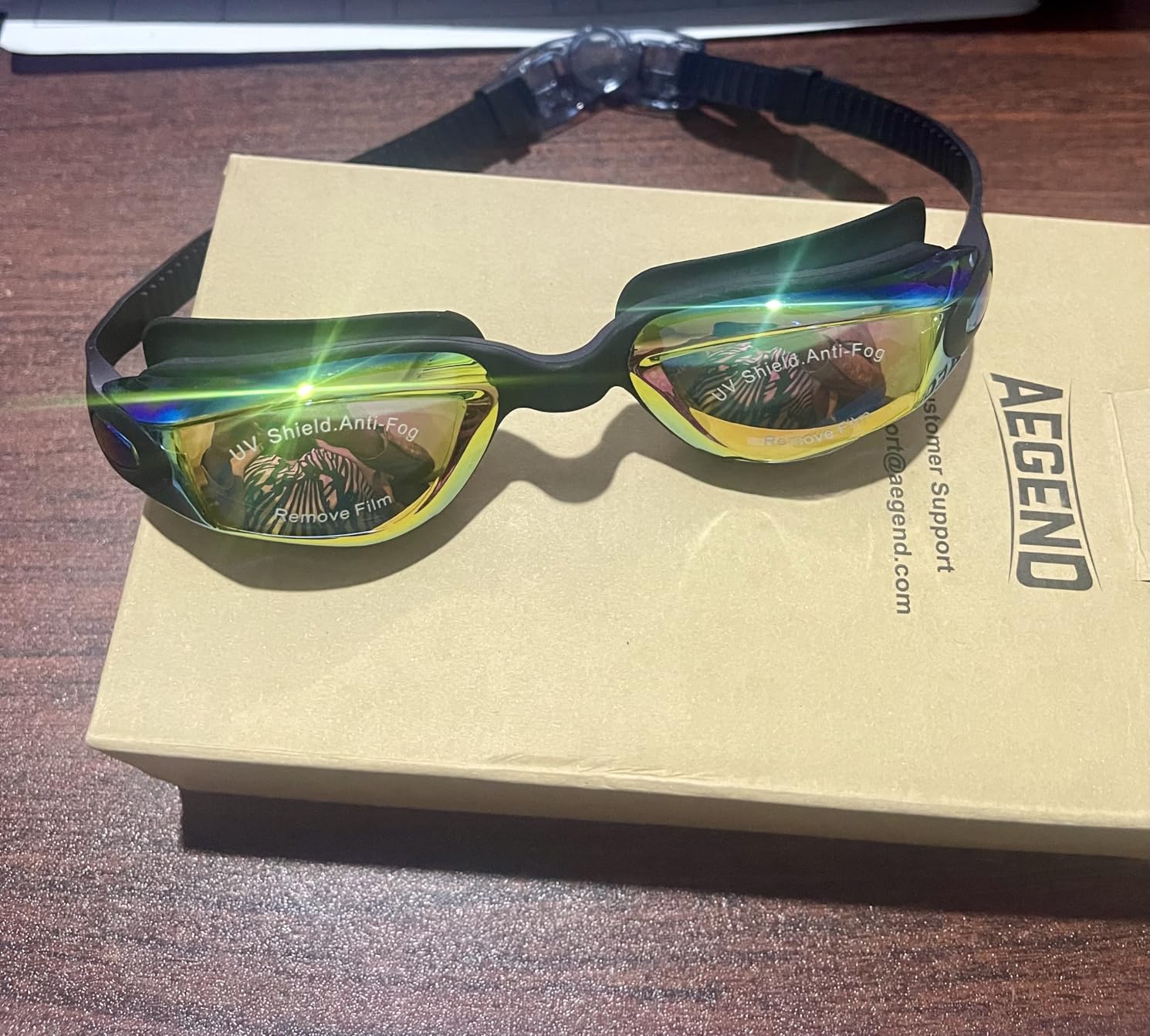
1. Aegend Kids Swimming Goggles — Best Overall Pick for Ages 4–12

The Aegend Kids Swimming Goggles earn their top spot not through flashy gimmicks but through a disciplined execution of every fundamental. The silicone seal is wide, soft, and curved in a way that accommodates the broad range of facial geometries you find among children aged four to twelve. The lenses are large by kids’ goggle standards, providing a genuinely wide field of view that helps with spatial awareness in busy pools.
The adjustment system uses a simple one-piece silicone strap with a split that sits cleanly at the back of the head without catching hair — a detail that parents of children with long hair will deeply appreciate. The nose bridge comes in two sizes (usually included in the packaging), which is a meaningful differentiator at this price point. Most competing goggles at similar prices ship with a fixed nose bridge, which immediately excludes a chunk of potential wearers.
The anti-fog coating is applied to both lenses and holds well for a season of regular use when cared for correctly (rinse with cool water only, never wipe the inside surface). UV protection is 100% UVA and UVB, making these equally at home in indoor pools and outdoor summer swim sessions. The polycarbonate lenses resist shattering, which matters for the inevitable moments when a pair of goggles gets dropped on concrete or stepped on by an enthusiastic sibling.
✓ Pros
- Wide, adjustable silicone seal fits ages 4–12
- Interchangeable nose bridge included
- 100% UV protection
- Hair-friendly split strap design
- Excellent optical clarity
- Durable polycarbonate lenses
✗ Cons
- Anti-fog degrades if lenses are wiped
- Not ideal for competitive swim training
- Limited to clear/tinted versions only
Aegend Kids Swimming Goggles — Our #1 Overall Pick
Check Price on Amazon →2. Zeligerstar Kids Goggles — Best for Leak-Proof Performance

If your child has struggled with goggles that seem to seal fine in the bathroom mirror but turn into a slow trickle the moment they hit the water, the Zeligerstar goggles were designed precisely for that problem. The seal system uses a thicker-than-average ring of soft silicone that creates what the manufacturer calls a dual-barrier contact zone — essentially, the silicone makes contact at two concentric rings rather than one, doubling the number of watertight points of contact per eye.
In practice, this design is noticeably more effective at handling the kind of movement-induced seal breaks that recreational swimmers commonly experience: flip turns, jumping in feet-first, surface dives, and the general rough-and-tumble of pool games. Where thinner-sealed goggles begin to admit trickles of water after a child lands hard in the pool, the Zeligerstar seal holds. Our guide to the best swimming goggles that don’t leak explores this seal technology in more depth.
The anti-fog coating is adequate, though not the best in this roundup. The lenses themselves offer good clarity, and the integrated UV protection handles both indoor fluorescent glare reduction and full outdoor UV blocking. The strap adjustment is a quick-release buckle system that even children can operate independently — a practical feature for kids old enough to handle their own gear at the pool.
✓ Pros
- Dual-barrier silicone seal minimizes leaking
- Child-operable quick-release buckle
- Strong UV protection
- Good visibility in tinted lens version
- Available in multiple color options
✗ Cons
- Anti-fog durability is average
- Slightly narrow field of view vs. Aegend
- Seal can be firm for very small faces
Zeligerstar Kids Goggles — Best Leak-Proof Seal
Check Price on Amazon →3. Vvinca Kids Goggles — Best for Ages 2–6 and Toddlers

Vvinca’s toddler-targeted kids’ goggles solve the single hardest problem in children’s swim equipment: getting a watertight seal on a toddler’s tiny, rounded face. The frame is small, the silicone is exceptionally soft, and the entire eye-cup profile is curved with a gentler arc than you find on most “kids” goggles — which often just mean “small adult.” For children aged two to six, this distinction is everything.
The shatter-resistant lenses have a higher-than-average impact resistance rating, which matters because toddlers and small children are significantly more likely to step on, throw, or dramatically fling their equipment. The elastic one-piece strap is designed to go over the head easily — a key feature when you’re wrestling a two-year-old poolside — and distributes pressure evenly across the back of the head rather than creating a single tightest point.
Parents particularly appreciate that these goggles don’t require a degree in mechanical engineering to adjust. The single-piece elastic construction means you resize once, and then they stay at that size for the season. For toddlers and preschoolers, that simplicity is genuinely valuable. If you’re specifically looking for goggles for the youngest swimmers, our guide to the best swimming goggles for toddlers has additional age-targeted options and even more fitting guidance.
✓ Pros
- Specifically sized for toddler face geometry
- Extra-soft silicone — no red marks
- Simple single-strap design
- Shatter-resistant lenses
- Fun color options kids love
✗ Cons
- Will be outgrown by age 6–7
- Less adjustability than buckle systems
- Anti-fog is basic, not premium
Vvinca Kids Goggles — Best for Toddlers & Small Children
Check Price on Amazon →4. NSSIW Kids Swim Goggles — Best Value for Money
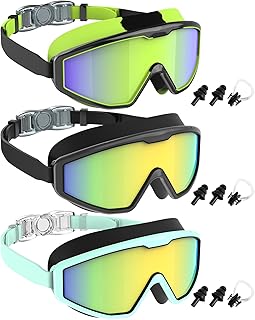
The NSSIW Kids Swim Goggles do something genuinely difficult: they deliver acceptable performance across every meaningful metric at a price that makes it easy to buy two pairs — one for the swim bag, one as a backup. For parents whose children have a talent for losing swim gear, or for families who want goggles for occasional summer pool visits rather than serious training, the NSSIW option is exactly the right call.
The silicone seal is softer than you’d expect at this price point, and the anti-fog coating on the inner lens surface is functional for a full swim session without noticeable degradation. The clear lens option is particularly good for indoor pools or overcast day swims when light transmission matters more than glare reduction. The adjustable strap system uses a simple slide-and-lock mechanism that parents can operate quickly and kids aged six and older can typically operate themselves.
Where the NSSIW goggles trade off against premium options is primarily in longevity. The silicone begins to show wear around the three-to-six month mark with regular use, and the strap connection points are the most likely failure zone. But at this price, buying a fresh pair every season or two is a perfectly sensible strategy, and many parents prefer having zero anxiety about a kid who loses or destroys their gear.
✓ Pros
- Excellent price-to-performance ratio
- Functional anti-fog for full sessions
- Soft, comfortable seal
- Great for backup or first-time buyers
✗ Cons
- Shorter lifespan (3–6 months heavy use)
- Less precise fit adjustment
- Not suitable for competitive training
NSSIW Kids Swim Goggles — Best Budget Pick
Check Price on Amazon →5. Vvinca Anti-Pull Toddler Goggles — Best No-Hair-Tangle Design

If you have ever spent ten agonizing minutes picking a swim goggle strap out of a child’s tangled hair at the side of a pool while other parents watched sympathetically, the Vvinca Anti-Pull Toddler Goggles were made for you. The strap uses a braided flat-silicone construction rather than the more common tubular or ribbon designs, and it incorporates an anti-snag surface treatment that dramatically reduces the way the strap grabs and traps individual hair strands.
The design is especially effective for children with fine, long, or wavy hair — the three hair types most prone to wrap-and-tangle around conventional goggle straps. The split strap at the back of the head is smooth-edged, further reducing the points at which hair can catch. Removal takes seconds, not minutes, and doesn’t require a parent with the patience of a surgeon.
Beyond the hair-specific feature, these goggles hold up well on fundamental performance metrics. The seal is generous and soft, the anti-fog is adequate for recreational use, and the lenses are impact-resistant. They’re sized for toddlers through early elementary school children, with a strap range wide enough to accommodate the growth between age three and age seven without replacement.
✓ Pros
- Anti-snag strap — virtually no hair pulling
- Flat-braid design distributes pressure evenly
- Impact-resistant lenses
- Generous seal for toddler faces
- Grows with child ages 3–7
✗ Cons
- Not suitable for competitive swim use
- Limited color palette
Vvinca Anti-Pull Goggles — No-Tangle Hair-Friendly Design
Check Price on Amazon →6. TYR Swimple Goggles — Best for Swim Team & Competitive Training

TYR is one of the sport’s most respected brands in competitive swimming, and the Swimple Goggles are their flagship option for junior athletes aged six through twelve who are serious about training. These are a fundamentally different type of product from recreational goggles — they’re designed around the specific demands of lap swimming and competitive racing, not splashing around at the community pool on a Saturday afternoon.
The lens profile is smaller and lower-drag than recreational styles, sitting closer to the orbital bone to reduce water resistance during freestyle and backstroke. The silicone seal is firmer — not harsh, but distinctly more performance-oriented — and creates a seal that holds through flip turns, racing dives, and the vigorous head movements that intensive swim training involves. The optical quality is notably better than recreational alternatives, with lenses engineered for distortion-free vision across the full field of view.
TYR offers the Swimple in a range of lens tints relevant to competitive swimming: clear for indoor pools with standard lighting, smoke for bright indoor facilities, and mirrored for outdoor competition or bright leisure pools. This tint-matching approach is something you generally only encounter in products made by brands that genuinely understand competitive aquatic sport. Our guide to the best competitive swimming goggles goes deeper on the technical distinctions between racing-oriented and training-oriented goggle designs for all ages.
✓ Pros
- Performance-grade optical clarity
- Multiple tint options for different conditions
- Seal holds through flip turns and racing dives
- Low-profile design reduces drag
- Trusted brand with swim team heritage
✗ Cons
- Firmer seal less comfortable for casual use
- Premium price vs. recreational options
- Overkill for recreational swimmers
TYR Swimple Goggles — Top Pick for Junior Competitive Swimmers
Check Price on Amazon →7. Arena Junior Anti-Fog Goggles — Best Runner-Up for Ages 6–12
Arena is another brand with deep roots in competitive swimming, and their Junior Anti-Fog goggles occupy an interesting middle ground between recreation and performance. They’re more comfortable for everyday use than the TYR Swimple (the seal is softer and more generous) but a step up in optical quality and build durability compared to the recreational-focused options on this list. For a child who swims regularly — lessons twice a week, plus recreational swims on weekends — the Arena Junior goggles are genuinely the sweet spot.
The anti-fog coating is one of the better implementations in this price bracket. Arena uses a dual-layer coating that maintains fog-free performance for a longer period than single-layer alternatives, provided the lenses are rinsed rather than wiped after use. The silicone seal is graduated in firmness — softer at the orbital contact zone and firmer at the frame structure — which creates a combination of comfort and structural integrity that holds up well to regular use.
For comparison shopping between Arena and other performance-oriented brands, our detailed Arena Cobra Ultra vs. Speedo Fastskin comparison gives excellent context on how Arena approaches goggle engineering across their product line. The Junior goggles embody the same engineering principles at a size and price appropriate for children. If your child is just starting to take lessons or has been swimming recreationally, the Arena Junior goggles are a thoughtful upgrade from basic recreational goggles, priced accordingly.
✓ Pros
- Excellent dual-layer anti-fog coating
- Premium brand quality at reasonable price
- Comfortable graduated-firmness seal
- Ideal for regular swim lessons + recreation
- Good optical quality
✗ Cons
- Not specifically designed for toddlers
- Slightly less wide-angle view than Aegend
Arena Junior Anti-Fog Goggles — Outstanding All-Round Option
Check Price on Amazon →Head-to-Head Comparison Table
The table below distills our full review into a quick-reference format. Use it to cross-check the specific feature that matters most to your situation — whether that’s toddler sizing, competitive performance, or simply the best bang for your budget.
| Goggle | Best For | Age Range | Anti-Fog | UV Protection | Leak Resistance | Hair-Friendly |
|---|---|---|---|---|---|---|
| Aegend Kids | Overall best pick | 4–12 yrs | ✓ Very Good | ✓ 100% | ⚡ Excellent | ✓ Split strap |
| Zeligerstar | Leak-proof seal | 5–12 yrs | ✓ Good | ✓ Full | ⚡ Outstanding | ✓ Quick-release |
| Vvinca Kids | Toddlers 2–6 | 2–6 yrs | ✓ Basic | ✓ Full | ✓ Good | ✓ Elastic |
| NSSIW Kids | Budget / backup | 5–12 yrs | ✓ Good | ✓ Full | ✓ Good | ✗ Standard |
| Vvinca Anti-Pull | No-tangle strap | 3–7 yrs | ✓ Good | ✓ Full | ✓ Good | ⚡ Best-in-class |
| TYR Swimple | Competitive swim | 6–14 yrs | ⚡ Excellent | ✓ Full | ⚡ Racing grade | ✗ Standard |
| Arena Junior | Regular lessons | 6–12 yrs | ⚡ Dual-layer | ✓ Full | ✓ Very Good | ✗ Standard |
Complete Buying Guide: What to Look for in Kids’ Swim Goggles
Buying the right pair of swim goggles for a child involves a different set of considerations than buying for an adult. Children’s facial geometry changes rapidly year over year, their tolerance for discomfort is lower and their patience for equipment adjustments is shorter, and their use cases range from unstructured recreational splashing to structured competitive training. A buying decision that makes sense for a six-year-old recreational swimmer may be completely wrong for an eleven-year-old club swimmer. Here’s what matters, ranked by importance.
Seal Material & Shape
Soft silicone is the gold standard. It conforms to facial contours, maintains elasticity through temperature changes, and causes less redness than harder materials. Foam-sealed goggles exist but degrade faster with pool chemical exposure.
Nose Bridge Fit
The nose bridge determines whether the goggles sit symmetrically over both eyes. Goggles with interchangeable nose bridges (short, medium, long) give the widest fitting range and are worth the marginal extra cost.
Strap Adjustment
Quick-release buckle systems give parents precise control and are easier to use poolside. Elastic all-in-one straps are simpler but less fine-tunable. Choose based on your child’s age and independence level.
Anti-Fog Coating
A factory-applied anti-fog coating on the inner lens is essential. Never wipe the inner lens surface — it removes the coating. Rinse only. Premium coatings (dual-layer or plasma-applied) last longer than basic single-coat treatments.
UV Protection
All reputable kids’ goggles now include 100% UVA/UVB protection. Verify this for any pair you’re considering, especially for outdoor swimming where reflective water surface UV exposure is significant.
Lens Type & Tint
Clear lenses work best indoors or for beginners who want maximum visibility. Tinted or mirrored lenses reduce glare outdoors. Prescription lenses are available for children with vision correction needs.
Durability
Polycarbonate lenses resist shattering. Thick silicone straps outlast thin ones. Injection-molded frames hold shape better than stamped plastic. For kids in lessons twice weekly, durability over six months is the meaningful benchmark.
Fun Factor
A pair of goggles a child is excited to wear is infinitely more valuable than technically superior goggles they refuse to put on. Color options and fun designs genuinely matter, particularly for children under age eight.
Our full guide on how to choose swimming goggles covers these criteria in greater depth, including specific guidance for children who need prescription lenses. For kids who specifically need corrective vision in the pool, our best prescription swimming goggles roundup has dedicated options with optical correction built into the lens.
How to Fit Swimming Goggles on Kids: Step-by-Step
Correct fitting is the single most important factor in goggle performance. A technically superior goggle that doesn’t fit will leak, fog, and cause discomfort. A mid-range goggle that fits perfectly will outperform an expensive pair every time. Here’s the reliable method for fitting goggles on children of all ages.
Step 1: The Suction Test
Remove the strap entirely from the equation. Press the goggle cup gently against your child’s eye socket with light pressure. If the goggle creates a suction seal and stays in place for three to five seconds when you release your hand, the size is correct. If it falls off immediately, the lens is too large. If it doesn’t sit flush all the way around, the lens shape doesn’t match your child’s orbital geometry — try a different style.
Step 2: Check the Nose Bridge
With the goggles pressed in place (strap still relaxed), look at where the nose bridge sits. It should rest comfortably on the bridge of the nose without pressing down into it or leaving a gap. If the lenses tilt toward each other or if there’s visible gapping at the inner corner of either lens, the nose bridge size is wrong. For goggles with interchangeable nose bridges, try the smaller or larger option. For fixed-bridge goggles, this is a signal to try a different model entirely.
Step 3: Set the Strap Tension
Once the lens is confirmed to be the right size and nose bridge is correct, place the goggles on your child’s face normally, route the strap around the back of the head, and adjust until the goggles form a seal without your child complaining of pressure. The classic test: you should be able to slide one fingertip between the strap and the back of the head. If you can’t, the strap is too tight. If the goggles immediately slide down the nose, the strap needs tightening. Our detailed guide on how tight swimming goggles should be explains the physics of this in useful depth.
Step 4: Water Test
The final step is a water test — the only truly definitive check. Have your child put their face in the water (bath, sink, or pool) for five to ten seconds. When they come up, check whether any water entered the goggles. A small amount of moisture from condensation is normal; actual water pooled at the bottom of the lens indicates a seal failure. If the goggles leaked, revisit the nose bridge size and strap tension before concluding the goggles are the wrong size entirely.
The Right Goggles at Every Age: A Parent’s Quick Reference
Children’s goggle sizing doesn’t follow the same intuitive progression as clothing or shoe sizes. Facial geometry changes in complex ways between infancy and adolescence, and the swimming context — what your child is actually doing in the water — changes just as dramatically. Here’s how to match goggle specifications to age and developmental stage.
Toddlers & Preschoolers (Ages 2–5)
The defining characteristic of a toddler’s face is the relatively wide, flat orbital area combined with a short nose bridge. Many goggles labeled “kids” are actually sized for school-age children and will not seal on a toddler’s face — they’re simply too large. Look for goggles specifically marketed for toddlers or ages 2–5, and prioritize extra-soft silicone seals that tolerate the approximate fit these small faces often require. The Vvinca Toddler Goggles and Vvinca Anti-Pull Strap options are our top recommendations for this age group.
At this age, swimming is primarily about water familiarization and basic stroke introduction. Goggles should enable your child to open their eyes comfortably underwater without the chemical irritation that would otherwise make them want to keep their face out of the water. Optical precision is less critical than a comfortable, non-intimidating fit. See our dedicated guide to best swimming goggles for toddlers for more fine-grained guidance in this age bracket.
Early School Age (Ages 5–8)
This is the most common entry point for structured swim lessons and the age at which children start developing actual swim technique. The nose bridge begins to lengthen and definition increases, making most standard kids’ goggles a reasonable fit. The Aegend Kids Goggles, Zeligerstar, and NSSIW budget options are all suitable for this age range. Look for goggles your child finds comfortable enough to wear without constant adjustment during a 30-minute lesson — if they’re fighting the goggles, they’re not developing their stroke.
Children in this age group also begin to develop strong aesthetic preferences. The color and appearance of their goggles genuinely matters to them. Don’t underestimate this factor — a pair of goggles a seven-year-old thinks are cool will be worn happily; a technically superior pair they find boring may be “forgotten” at home with suspicious regularity.
Tweens & Junior Swimmers (Ages 9–14)
By age nine or ten, most children’s facial geometry approaches adult proportions, though still scaled down. Standard adult goggles may begin to fit at the larger end of this range, but purpose-made junior goggles (like the TYR Swimple and Arena Junior) are designed specifically for this transitional size range. Children in structured swim team practice will benefit significantly from performance-grade goggles at this age, as the optical quality and seal precision of competitive goggles supports both better stroke mechanics and the race-starts and flip turns they’re now practicing regularly. Our guide to best swimming goggles for lap swimming is also relevant for children in this age group who are doing serious distance or technique training.
Understanding Lens Types for Kids’ Swim Goggles
The lens is the functional heart of a swimming goggle, and the variety of available options can be confusing for first-time buyers. Here’s a clear breakdown of what each lens type does and which situations it serves best for children.
| Lens Type | Best For | Light Transmission | UV Protection | Age Recommendation |
|---|---|---|---|---|
| Clear | Indoor pools, lessons, beginner swimmers | ~90–100% | Varies (check label) | All ages |
| Light Tint (blue/green) | Mixed indoor/outdoor use | ~60–80% | Full UV usually included | Ages 5+ |
| Dark Tint (smoke/gray) | Outdoor pools in bright sun | ~30–50% | Full UV | Ages 7+ |
| Mirrored | Outdoor, open water, strong glare | ~15–30% | Full UV | Ages 8+ |
| Polarized | Open water, outdoor distance swimming | ~30–50% | Full UV + glare reduction | Ages 10+ |
For most children in swim lessons or recreational pool use, clear or lightly tinted lenses are the right choice. They provide maximum visibility in the varied lighting conditions of an indoor pool and don’t compromise your child’s spatial awareness underwater. Dark tints and mirrored lenses can reduce visibility enough that younger children find them disorienting. Reserve polarized lenses for older children doing open-water swimming — our guide to the best polarized swimming goggles covers these in detail.
For children swimming competitively in outdoor venues, tinted and mirrored lenses become genuinely important performance tools. Glare from outdoor pool surfaces can make it difficult to spot the lane line, judge turns, or track competitors. A smoke or mirrored lens appropriate for the light conditions of the competition venue can make a meaningful difference to a junior competitive swimmer’s performance. This is one reason the TYR Swimple and Arena Junior both offer multiple lens options.
Anti-Fog Technology: What Actually Works for Kids
Fogging is the most common complaint among swim goggle users of all ages, and children are particularly susceptible to it because of the way they put on and take off their goggles (often with wet hands), the way they store them (often anywhere and everywhere), and the temptation to wipe the lenses clean when they look cloudy. Understanding how anti-fog works — and specifically what destroys it — is the key to maintaining clear vision for your child’s entire season.
How Anti-Fog Coating Works
The fogging you see inside swim goggles is condensation — water vapor from your child’s warm body contacting the cooler pool water side of the lens and forming tiny water droplets. These droplets scatter light, creating the white haze effect. Anti-fog coating works by making the inner lens surface hydrophilic (water-attracting) so that moisture spreads into a thin, uniform film rather than clustering into light-scattering droplets. A thin film is essentially optically transparent; clustered droplets are not.
Making Anti-Fog Last Longer
- Rinse lenses with cool, clean water immediately after swimming. This removes pool chemicals that degrade the coating over time.
- Store goggles in a ventilated case or goggle bag, never in an airtight container where moisture traps against the lens surface.
- Avoid exposing goggles to direct sunlight or heat during storage. UV and heat both break down coating chemistry faster.
- If water is visible inside the lenses after swimming, shake it out rather than wiping. Let the lenses air-dry in a cool location.
- Anti-fog goggle spray, applied sparingly to the inner lens, can extend effective coating life when used monthly.
Our full guide on how to stop swimming goggles fogging covers additional techniques including the natural saliva trick (effective but temporary), commercial anti-fog solutions, and what to do when factory coating has already been damaged. If your child’s goggles are already fogging consistently, that guide provides specific recovery steps to try before replacing the goggles outright.
How to Care for Kids’ Swim Goggles (Make Them Last)
With proper care, a good pair of children’s swim goggles will easily last a full swimming season. Without it, even the most expensive pair can degrade in six to eight weeks. The good news is that proper goggle maintenance is simple and takes less than two minutes after each swim. The bad news is that it requires consistent follow-through — something that is easier for parents to build as a routine habit than to rely on children to remember independently.
After Every Swim
The immediate post-swim routine is the most important maintenance window. Pool water — whether chlorinated, salt-treated, or bromine-treated — is mildly corrosive to silicone and optical coatings when left in contact over time. Rinse the entire goggle (frames, lenses, and strap) in cool, clean tap water immediately after leaving the pool. Turn the goggles so the lens faces downward and allow water to drain from inside the cups without touching the inner lens surface. Shake gently if needed. Do not use warm or hot water, which can accelerate silicone degradation.
Weekly Cleaning
Once per week for regular swimmers, clean the outer frame and strap with a small amount of mild dish soap and cool water, applied with your fingertips to the exterior surfaces only. Rinse thoroughly. This removes chlorine buildup from the strap and frame material that can make the silicone brittle over time. Our complete guide on how to clean swimming goggles has detailed guidance including specific cleaning agents to avoid (anything alcohol-based or abrasive will damage both the silicone and the coating).
Storage Between Uses
Store goggles in a mesh or ventilated bag that allows airflow. Goggle cases are good for transport but should not be the resting place between swims, as trapped moisture encourages mold growth and coating degradation. Keep goggles away from sunscreen, sunburn spray, and tanning oil — the chemicals in these products are particularly destructive to silicone seals and anti-fog coatings. If your child swims outdoors, ensure goggles are stored separately from the sunscreen bag.
When to Replace
Replace kids’ swim goggles when: the seal has lost its elasticity and no longer creates a watertight contact with the face; the anti-fog is permanently degraded and fogging occurs within minutes of submersion; the strap is cracked, brittle, or has lost its stretch; or the lenses are visibly scratched or distorted. For most children swimming two to three times per week, this occurs every six to twelve months. Competitive swimmers on daily training schedules may need replacement every three to four months.
Ready to Find the Perfect Pair?
All recommendations above include our affiliate tag — you pay the same price, and a small commission supports our independent research.
Browse All Kids’ Swim Goggles on Amazon →Specific Use Cases: Which Goggles for Which Situation?
Not all swimming happens in an outdoor lap pool on a sunny afternoon. Children swim in a wide variety of environments, each of which places different demands on goggle design. Here’s how to match the goggle to the context.
Indoor Pool Swim Lessons
The most common scenario for children’s swimming. Indoor pool lighting is typically fluorescent or LED, relatively dim compared to outdoor conditions, and the primary environmental challenges are chlorine protection and anti-fog performance. Clear lenses with a high-quality anti-fog coating are ideal. The Aegend Kids Goggles and Arena Junior both excel in this environment. Mirrored or heavily tinted lenses in indoor pools reduce visibility unnecessarily — avoid them unless your child has documented photosensitivity.
Outdoor Pool Recreation & Summer Swim
Outdoor swimming introduces UV glare and bright sunlight, making tinted or mirrored lenses genuinely useful. For children doing recreational outdoor swimming — at a community pool, water park, or lake — a light blue or green tint reduces glare without compromising visibility. For serious outdoor training, smoke or gray tints are the competitive standard. Don’t forget that outdoor goggles should also provide 100% UVA/UVB protection — all of our top picks include this, but always verify.
Open Water Swimming
Open water swimming — lakes, rivers, and the ocean — places higher demands on goggles than pool swimming. Water clarity varies enormously, currents require more frequent head-lifting for sighting, and UV exposure from reflective water surfaces is significantly higher than in pools. For children doing open water swimming — increasingly common as wild swimming and triathlon junior events grow in popularity — our best open water swimming goggles guide is the definitive resource. The principles overlap with this guide, but open water specific features (wider field of view, stronger UV protection, more robust seals) become more important.
Children with Vision Correction Needs
A growing number of children need optical correction in the pool. Standard swim goggles will not accommodate glasses. Purpose-made prescription swim goggles are available in a range of correction strengths (diopter levels), with the lens ground directly to the correction prescription or using a standardized minus/plus diopter system for approximate correction. Our guide to the best prescription swimming goggles covers this topic thoroughly, including how to select the nearest available correction to your child’s actual prescription and which brands offer the widest range of correction options.
Children with Wide Faces
Some children have facial geometry — wide-set eyes, broad orbital areas — that makes standard goggle sizing problematic even when the age range seems appropriate. If your child consistently experiences leaking at the inner corners of the lens (near the nose bridge), wide-face goggle designs should be investigated. Our guide to the best swimming goggles for wide faces includes models with wider temple widths and more generous lens spacing that address this directly.
Frequently Asked Questions About Kids’ Swim Goggles
Final Verdict: The Best Swimming Goggles for Kids
After reviewing every significant option in the children’s swim goggle market, the clear pattern that emerges is this: fit matters more than any other single factor. A perfectly fitted mid-range goggle will consistently outperform an expensive pair that doesn’t seal properly on your child’s face. Start with the fit test, confirm the nose bridge size works, set the strap to a comfortable tension, and you’re most of the way there.
For most children, the Aegend Kids Swimming Goggles are the right starting point — they fit the widest range of faces, include interchangeable nose bridges, provide 100% UV protection, and deliver a fog-free experience that holds up through a full season of lessons and recreation. If your child has fine or long hair that turns goggle removal into a minor surgery, the Vvinca Anti-Pull Strap design solves that problem specifically. For toddlers who are just discovering the pool, the Vvinca Toddler Goggles are sized correctly for the stage. For a junior competitive swimmer, the TYR Swimple is the serious, performance-grade choice.
Whatever you choose, invest a few minutes in a proper pool-side fitting session before your child’s first real swim. It takes less time than it sounds, and it’s the single most reliable predictor of whether those goggles will be worn happily or quietly abandoned in the swim bag.
Have questions about a specific model, a fitting challenge, or a use case we haven’t covered? Explore the related guides in our sidebar, or head to our complete swimming goggle hub for every guide we’ve published across age groups, experience levels, and goggle types.