Why Do My Swimming Goggles Leak?
If water keeps creeping in mid-set, it’s almost never bad luck — it’s one of nine specific, fixable causes. Here’s how to find yours in the next few minutes.
The Real Reason Your Goggles Are Leaking
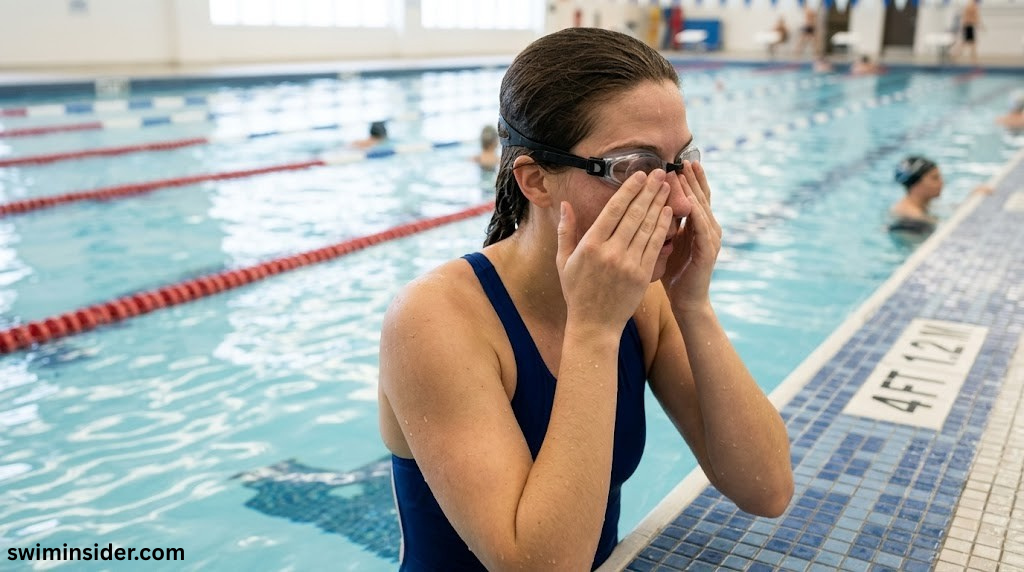
You push off the wall, swim ten strokes, and suddenly the world goes blurry and stings a little. By the time you flip at the far wall, you’re swimming half-blind with one eye squeezed shut. It’s one of the most universally annoying problems in the sport, and it has almost nothing to do with luck.
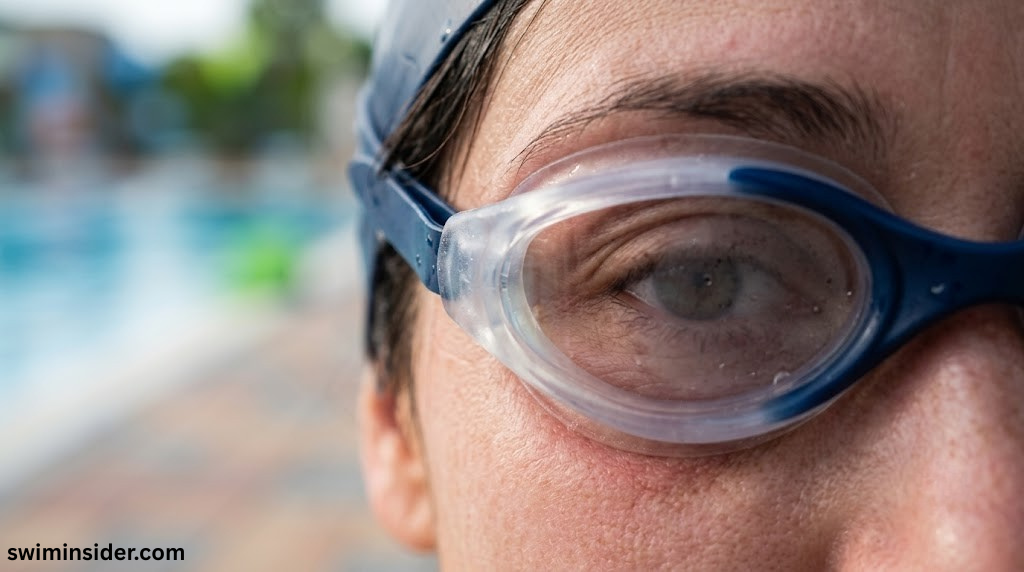
Goggles don’t leak randomly. They leak at a specific, repeatable point where one of a small number of mechanical things has gone wrong: the seal isn’t making even contact with your skin, something is physically breaking that contact (hair, an eyebrow, a smear of sunscreen), or the gasket material itself has degraded to the point where it can no longer flex and recover. Every single leak traces back to one of nine causes, and most of them take less time to fix than it took you to read this sentence.
This guide walks through each cause in the order swimmers most commonly run into it, starting with the two culprits responsible for the majority of leaks — strap tension and gasket wear — before moving into fit, technique, and the slower-burning issues like UV degradation. If you’ve already ruled out the obvious stuff and just want a pair that’s built to stop leaking in the first place, our guide to goggles that don’t leak is a good shortcut. And if you’re newer to the sport and wondering whether this is just a beginner problem, it isn’t — though it does show up more often when you’re still dialing in fit, so our picks for beginner swimmers are worth a look too.
Before we get into individual causes, it helps to understand what’s actually happening at the seal. A swim goggle doesn’t keep water out by being “tight.” It keeps water out because a soft gasket — usually silicone, sometimes a softer TPR or TPE blend — makes continuous, even contact with the skin around your eye socket, all the way around, with no gaps. Tightening the strap increases the pressure pushing that gasket against your skin, but pressure can’t fix a gap. If the gasket is hardened, miss-shaped, sitting on a hair, or simply the wrong size for your eye socket, no amount of strap tension will close that gap — it’ll just leave you with a headache and a leak.
A leak is any break in this contact line — tightening the strap can’t repair a gap, only increase pressure on contact that already exists.
60-Second Self-Check: Find Your Leak Pattern
Before troubleshooting every cause one by one, run through this quick check. The pattern of your leak — where it happens, when it starts, and which side — usually points straight to the culprit.
- Leak starts the moment you dive in, then stops → almost always impact knocking the seal loose (see Cause 9).
- Leak builds slowly over a long set → usually gasket fatigue or strap tension (Causes 1–2).
- Leak is only on one side, consistently → look at nose bridge fit or hair/eyebrow interference on that side (Causes 4 & 6).
- Leak appeared suddenly after months of a dry pair → check for hardened gaskets from age or UV exposure (Cause 8).
- Leak happens right after applying sunscreen or moisturizer → that’s residue breaking the seal (Cause 7).
- Goggles feel “right” and look brand new, but still leak → very likely the wrong shape for your face, not a defect (Cause 3).
Keep your pattern in mind as you read — it’s the fastest way to skip straight to the section that actually applies to you. And if part of your check involves wondering whether your strap is even in the right ballpark, our guide on how tight swimming goggles should be is a useful gut-check before you go any further.

Speedo Vanquisher 3.0 Mirror Goggles
Cushioned silicone gaskets, four interchangeable nose pieces, and a low-profile fit that seals well across a wide range of face shapes — the goggle we point most leak-frustrated swimmers toward first.
Check Price on AmazonCause 1: Your Strap Tension Is Wrong (Usually Too Tight)
This is the single most common mistake, and it’s almost backwards from what most swimmers assume. The instinct when goggles leak is to crank the strap tighter, but an overtightened strap can actually cause more leaking, not less. Cranking down hard enough distorts the gasket’s shape, pulling it slightly away from your skin at the edges even as it digs in at the center. You end up with red rings around your eyes and a leak that won’t go away, because the problem was never about force.
The other half of this cause is uneven tension — one side of the strap pulled noticeably tighter than the other, which is extremely easy to do with a quick one-handed adjustment after a flip turn. That asymmetry tilts the goggle slightly, lifting the gasket off your skin on the looser side. It’s a tiny tilt, but it’s enough.
How to fix it
- Remove the goggles completely and loosen the strap two or three notches from wherever it currently sits.
- Place the goggles on your face without the strap pulled over your head yet — press gently and hold for two seconds. You should feel light, even suction, not pinching.
- Pull the strap over your head and tighten just until it stops slipping — that’s almost always tighter than it needs to be already.
- Check both sides in a mirror; the strap should sit level, not higher on one ear than the other.
If you’re not sure what “right” actually feels like, this is worth pairing with a longer read — our breakdown of how tight swimming goggles should be goes through the exact pressure you’re aiming for, and it’s a common enough mix-up that it’s also covered in our most comfortable swim goggles roundup, since comfort and correct tension usually arrive together.

Arena Cobra Core “No Leak, No Fog” Goggles
A dual-density gasket designed specifically to hold its seal without requiring aggressive strap tension — good for swimmers who keep overtightening out of habit.
Check Price on AmazonCause 2: Your Gaskets Are Worn Out or Hardened
Every gasket material — silicone included — has a lifespan, and chlorine is genuinely hard on it. Repeated exposure to chlorinated water, combined with however much time the goggles spend baking in a hot car or a sunny gym bag, slowly leaches the plasticizers out of the material. The gasket goes from soft and pliable to slightly stiff, then visibly less squishy, then eventually a little crumbly at the edges. None of that happens overnight, which is exactly why it’s easy to miss — you don’t notice your gaskets aging, you just notice that your goggles “suddenly” started leaking a few months in.
A simple way to check: pinch the gasket between two fingers. If it springs back instantly and feels genuinely soft, it’s fine. If it feels slightly rubbery-stiff, or if you can see fine cracking or a change in color/texture compared to when the goggles were new, that’s a gasket on its way out — and once it’s lost its elasticity, no adjustment fixes that, because the material itself can no longer conform to your skin the way it used to.
Rinsing goggles in fresh water after every swim and keeping them out of direct sun and heat when not in use meaningfully slows this process down. If you haven’t been doing that, our guide on how to clean swimming goggles covers the simple routine that adds real months to gasket life.
| Gasket Condition | What It Feels Like | What To Do |
|---|---|---|
| Fresh / healthy | Soft, springs back instantly, no texture change | Nothing — just rinse after swims |
| Early wear | Slightly firmer, recovers a bit slower | Reduce sun/heat exposure, monitor |
| Worn | Noticeably stiffer, mild surface texture change | Plan a replacement within weeks |
| Failed | Hard, cracked, or visibly deformed | Replace now — it won’t reseal |

Speedo Vanquisher 2.0 Mirrored Goggles
A reliable, inexpensive swap-in when your current gaskets have hardened — soft plastic gaskets and four nose-piece sizes for a quick refit without overspending.
Check Price on AmazonCause 3: Your Goggles Are the Wrong Shape for Your Face
Here’s the part that frustrates a lot of swimmers: scientists have identified hundreds of genes that influence facial structure, and eye-socket depth, brow prominence, and the distance between your eyes all vary enormously from person to person. That means there is no single “best” goggle — only a best goggle for your particular face, and a goggle that seals perfectly on your training partner can leak constantly on you, even brand new, even at the correct tension.
This is the cause that most often gets misdiagnosed as a strap problem, simply because tightening a goggle that’s the wrong shape does sometimes reduce a leak slightly — right up until it gives you a headache instead. The actual fix isn’t more pressure, it’s a different gasket geometry: deeper-set gaskets for deep eye sockets, shallower low-profile designs for flatter faces, narrower frames for narrower faces, wider frames for wider ones.
Face shape differences also scale with age and sex in fairly predictable ways, which is why so many goggle lines split their fit by category rather than offering one universal shape. If you’re shopping by category, our guides to the best swimming goggles for kids and best swimming goggles for toddlers are built specifically around the smaller, flatter eye-socket profile common at those ages, while our best swimming goggles for women picks lean toward narrower, shallower gasket options. If you’ve already tried a few “normal” pairs and nothing seals, our best swimming goggles for wide faces guide covers the wider frame options that solve this far more often than people expect.
For anyone who’s genuinely tried multiple models with no luck, it’s worth knowing there’s now a category of goggles built around an actual 3D scan of your own face rather than a generic mold — our Magic5 goggles review covers how that custom-fit approach works and who it’s worth the extra cost for.
Same goggle, two different outcomes — the fix is matching gasket depth to socket depth, not strap force.

Speedo Women’s Vanquisher 3.0 Mirror Goggles
Extra-cushioned, women’s-specific gasket geometry that solves leaking for swimmers whose eye sockets sit narrower and shallower than a standard unisex mold accounts for.
Check Price on AmazonCause 4: A Mismatched or Loose Nose Bridge
Most modern racing and training goggles connect the two eyecups with an interchangeable nose bridge, available in several lengths, precisely because the distance between people’s eyes varies so much. If that bridge is even slightly too long, the eyecups sit too far apart and the gaskets pull away from your skin at the inner corners — usually the very first place a leak shows up, since it’s the thinnest, most mobile skin on your face. Too short, and the goggles pinch your nose while still somehow leaving gaps at the outer edges as the frame torques unnaturally.
This is genuinely one of the easiest fixes in this whole list, and also one of the most overlooked, because swimmers assume the bridge that came pre-installed is “the” bridge rather than one of several options sitting in the package.
How to size it correctly
- Pop out the current nose bridge (most snap or slide out with firm, even pressure — some brands need a bit of a tug, which is normal).
- Try the next size down first if you’ve been leaking at the inner corners; try a size up if the
If your current pair didn’t come with swappable bridges at all, that’s usually a sign it’s a fixed-frame budget model — worth factoring in if this keeps being the recurring issue, since a bridge you can actually size is a permanent fix rather than a workaround.
Cause 5: You’re Seating the Goggles Wrong Before Swimming
Even a perfectly fitted, brand-new goggle will leak if it’s put on wrong. The most common mistake is pulling the strap over your head first and letting the goggles snap into place under tension, rather than seating the gasket gently against your face first and only then stretching the strap back. Snapping them on under tension almost always traps a tiny fold or air pocket somewhere in the gasket — usually near the brow or the inner corner — and that fold becomes your leak the moment you push off the wall.
The fix is a two-step habit: press the eyecups onto your face first with your hands, feel for a smooth, even seal all the way around with light finger pressure, and only then pull the strap over your head. It adds about three seconds to putting your goggles on and eliminates a surprising share of “random” leaks that show up in the first 25 meters of a swim.
Cause 6: Hair, Eyebrows, or a Swim Cap Edge Breaking the Seal
Remember that the seal only needs one continuous gap to fail, and a single stray eyebrow hair, a loose strand escaping a swim cap, or the folded edge of the cap itself sitting under the gasket is more than enough to create one. This is especially common for swimmers with thicker brows or longer hair, and it’s often the explanation behind a leak that’s on the exact same spot every single time — because it’s the same hair or the same fold, not a fit problem at all.
Before assuming it’s the goggles, run a finger along the gasket line after putting your cap on and goggles over it, checking specifically for anything trapped along the eyebrow ridge and at the temples. If you swim with a cap, put the cap on first, then the goggle straps over the cap — not under it — which keeps the cap’s edge away from the gasket’s contact line entirely.
Cause 7: Sunscreen, Moisturizer, or Facial Oil on the Seal
A silicone gasket doesn’t just rely on shape to hold a seal — it relies on a small amount of grip against your skin, and anything oily sitting between the gasket and your skin cuts that grip dramatically. Sunscreen is the most common offender for outdoor and open-water swimmers, but plain moisturizer, sweat mixed with leftover skincare, or even natural facial oil on a humid day can do the same thing. The telltale pattern is a leak that shows up specifically on days you’ve applied something to your face beforehand, and doesn’t happen on days you haven’t.
The fix is sequencing: apply sunscreen well before you plan to swim, give it time to properly absorb rather than sit on the surface, and specifically wipe the area right around your eyes clean with a dry cloth before putting goggles on, since that’s the zone that matters most. Mineral sunscreens tend to leave more surface residue than chemical ones, so if this is a recurring issue for outdoor swims, that’s worth knowing.
Cause 8: General Age and UV/Chlorine Degradation
This overlaps with Cause 2 but deserves its own mention because it’s driven by exposure rather than just use — a pair that sits in a hot car window or a sunny gym bag for months will degrade faster than a pair used daily but stored in a dark bag, even if the second pair sees far more pool time. UV exposure breaks down the polymer chains in silicone and plastic gaskets the same way it fades a car dashboard, and chlorine accelerates that process further.
There’s no fixing degraded material — it’s a replacement, not a repair — but the timeline is genuinely within your control. Rinsing after every swim, air-drying out of direct sunlight, and storing goggles in a case rather than loose in a bag can roughly double how long a gasket stays soft and sealing well, according to most swim-gear manufacturers’ own care guidance.
Cause 9: Dive Entries and Race Starts Knocking the Seal Loose
If your leak pattern matches the first item in the 60-second check above — water gets in right at entry and then the goggles hold fine for the rest of the swim — the seal itself is probably fine, and the issue is impact. A dive or a hard push-off hits the face with enough water pressure to momentarily flex the gasket away from the skin, just long enough for a small amount of water to sneak in before it reseals.
Two things help here. First, technique: entering the water at a cleaner angle, with your head more tucked, reduces the direct force hitting the goggle face. Second, gear: some racing goggles are specifically built with stiffer frames or additional strap points designed to resist exactly this kind of impact flex, which is worth looking into if you’re doing a lot of racing starts rather than just push-offs during training.
Pressure-Test Your Goggles Before You Get In the Water
Before jumping in and hoping for the best, there’s a simple dry-land test that tells you almost immediately whether you’re dealing with a fit problem or a wear problem, without wasting a set finding out mid-pool.
- Press the goggles onto your face without the strap over your head, holding them in place with just your fingers for a slow count of five.
- Let go completely and see how long the suction holds before the goggles start to peel away on their own — a healthy seal should hold for at least a couple of seconds after release.
- If they fall away almost instantly, that points to gasket wear or a face-shape mismatch rather than strap tension, since there’s no strap involved in this test at all.
- Repeat the same test after cleaning the gasket with a dry cloth, in case residue was the hidden factor.
This test is worth repeating every few months on a pair you rely on regularly — a gradually shortening suction hold time is one of the earliest, clearest signs that a gasket is starting to age out, often before you’d notice anything different during an actual swim.
Should You Try to Repair Them or Just Replace Them?
Worth Troubleshooting First
- Leak is new, sudden, and the goggles are otherwise young
- Gasket still feels soft and springs back when pinched
- Leak pattern matches strap tension, seating, or bridge sizing
- You haven’t tried adjusting the nose bridge yet
Time to Replace
- Gasket is visibly hardened, cracked, or discolored
- Goggles are 6+ months of regular use old
- Suction test fails even right after cleaning
- You’ve already tried tension, bridge, and seating fixes
As a rule of thumb, if you’ve worked through the self-check, the pressure test, and at least the strap and bridge adjustments without any improvement, that’s a strong signal the gasket material itself has reached the end of its usable life — and no further fiddling is going to change that. Goggles are inexpensive enough relative to a frustrating, half-blind swim set that replacing a genuinely worn pair is almost always the more time-efficient call.
Best Anti-Leak Goggles Compared
If you’ve worked through the causes above and landed on “I just need a goggle that seals better,” here’s how the models referenced throughout this guide stack up against each other.
| Model | Best For | Gasket Type | Nose Bridge |
|---|---|---|---|
| Speedo Vanquisher 3.0 Mirror | Wide range of face shapes | Cushioned silicone | 4 interchangeable sizes |
| Arena Cobra Core | Swimmers who overtighten | Dual-density silicone | Adjustable, low-tension design |
| Speedo Vanquisher 2.0 Mirrored | Budget replacement | Soft plastic | 4 interchangeable sizes |
| Speedo Women’s Vanquisher 3.0 | Narrower, shallower eye sockets | Extra-cushioned silicone | 4 interchangeable sizes |
None of these will fix a technique or residue issue — but if fit or gasket wear is your actual cause, any of the four above is a solid, tested starting point rather than a gamble on an unfamiliar brand.
Tonight’s Fix-It Checklist
- Loosen the strap two notches and re-seat the goggles by hand before pulling the strap over your head.
- Pinch-test the gasket — soft and springy is good, stiff or crackly means it’s time to replace.
- Try the next nose-bridge size if you’ve never swapped it from the factory setting.
- Run a finger along the seal line checking for trapped hair or a folded cap edge.
- Wipe the gasket and the skin around your eyes dry if you’ve applied sunscreen or moisturizer.
- Run the five-second dry-land pressure test before getting in, not after you’re already leaking.
Frequently Asked Questions
Why do my goggles only leak in one eye?
A single-side leak almost always points to something localized on that side — a nose bridge that’s pulling the frame slightly crooked, an eyebrow hair trapped under that gasket, or a strap side that’s been pulled tighter than the other. It’s rarely a sign that the whole goggle is the wrong fit, since a true fit mismatch usually shows up on both sides.
Will tightening my goggles more eventually stop the leak?
Usually not, and it often makes things worse. Once a gasket is seated correctly, additional tension mostly just distorts its shape and can pull it away from your skin at the edges, on top of leaving painful pressure marks. If tightening hasn’t fixed it within a notch or two, the cause is somewhere else on this list.
How often should I actually replace swim goggles?
For regular swimmers — several sessions a week — most gaskets start showing real wear somewhere between four and eight months, though sun and heat exposure can shorten that considerably. The pinch test and the dry-land pressure test are more reliable than a fixed timeline, since usage and storage conditions vary so much between swimmers.
Can I use anti-fog spray to also help with leaking?
Anti-fog treatments address condensation on the lens, not the seal around the gasket, so they won’t fix a leak on their own. That said, some sprays leave a light residue that can end up near the gasket edge if applied carelessly, so it’s worth applying them to the inside of the lens only and avoiding the gasket area entirely.
Is it normal for new goggles to leak slightly for the first swim or two?
A very minor leak in the first swim or two isn’t unusual, since a brand-new silicone gasket can take a swim or two to fully conform to your face shape. If it hasn’t resolved by the third or fourth swim, though, that’s a sign of a fit mismatch rather than a break-in period.
The Fix Is Almost Always Smaller Than You Think
A leaking goggle feels like a gear failure, but in the overwhelming majority of cases it’s one specific, identifiable thing — tension, a hardened gasket, a nose bridge that’s never been adjusted, or a stray hair sitting exactly where it shouldn’t. Working through the self-check and the dry-land pressure test will point you at your actual cause faster than guessing, and most of the fixes above take less time than finishing this article did.
If you’ve genuinely ruled out technique, fit adjustments, and residue, and the gasket itself just isn’t sealing anymore, that’s the point where replacing the goggles is the right call rather than a failure of troubleshooting — gaskets are a wear item, the same way tires or running shoes are, and no amount of careful adjustment restores material that’s already broken down.
Speedo Vanquisher 3.0 Mirror Goggles
Still the most consistently reliable seal across different face shapes of anything covered in this guide — a solid first replacement if you’re starting fresh.
Check Price on Amazon
Pingback: How to Swim Faster: 7 Proven Technique Steps & Tips