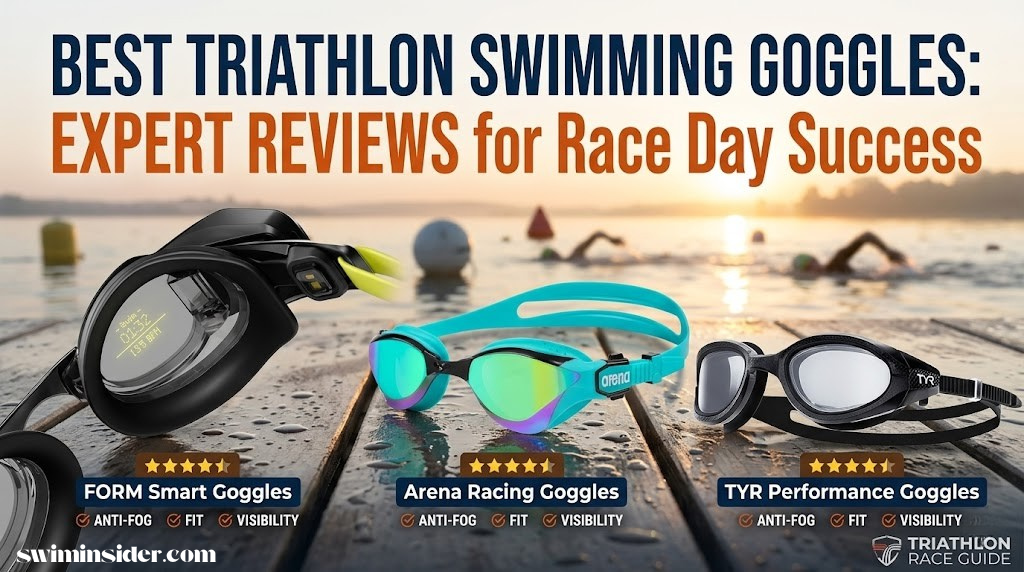
Best Triathlon Swimming Goggles: Expert Reviews for Race Day Success
Discover high-performance goggles engineered for the swim leg. Expert comparisons of speed, visibility, and transition efficiency for triathlon athletes.
Quick Answer
Best Overall: Arena Cobra Ultra delivers professional-grade performance with hydrodynamic design and exceptional optical clarity. Best for Tech Enthusiasts: FORM Smart Swim 2.0 provides real-time metrics during racing. Best Value: Zoggs Predator Flex offers proven reliability at mid-range pricing. Best for Bright Conditions: TYR Special Ops 3.0 Polarized manages glare while maintaining underwater visibility. All excel in competitive racing scenarios.

Introduction: The Triathlon Swim Advantage
The swim leg separates triathlon from running and cycling—it’s the one discipline where your equipment choices have the most direct impact on performance. Unlike pool swimmers who can afford to experiment, triathletes must nail their goggle selection before race day. Poor visibility costs seconds through off-course navigation. An uncomfortable seal causes distracting leaks mid-race. Inadequate glare protection leads to fatigue in the first 500 meters.
Elite triathletes view goggle selection as seriously as bike and wetsuit choices. The difference between the right pair and the wrong pair can add minutes to your swim leg or steal the joy from an otherwise excellent race. This comprehensive guide reviews five of the most trusted models among competitive triathletes and provides decision-making guidance specifically for race scenarios.
Whether you’re training for your first sprint tri or pursuing age-group podiums, this guide ensures you cross from swim to bike with optimal visibility, comfort, and confidence. Swimming goggle selection matters everywhere, but in triathlon, it matters most.
What Triathletes Need: Beyond Standard Goggles
Triathlon demands different goggle characteristics than recreational swimming or dedicated pool training. Your race-day eyewear must optimize for specific triathlon-unique challenges that don’t apply elsewhere.
Drafting Visibility and Sighting
Seeing Your Competition
In triathlon, you’ll spend significant time near or behind other swimmers. Your goggles must provide clear peripheral vision to position yourself effectively in the pack while avoiding swimmers entering your space. This requires wider-angled lenses and superior underwater clarity compared to goggles optimized for solo swimming. Many triathletes prefer competitive racing goggles that prioritize lateral vision.
Race Course Navigation
Sighting Buoys and Landmarks
Unlike pool lanes, open water race courses require constant sighting to maintain course heading. Your goggles should offer slightly elevated lens positioning (many models include this feature) that lets you see above water with minimal head lifting. This dramatically improves race efficiency and prevents the 30-50 meter course deviations that waste precious time.
Transition-Ready Design
Rapid Adjustability
Triathletes don’t have time to fiddle with goggle straps in transition. Your race goggles should fit perfectly on the first try, without requiring mid-race adjustments. Quick-release or secure strap systems keep goggles locked in place even during aggressive racing. Triathlon goggle designs emphasize this reliability more than recreational models.
Glare Management for Variable Conditions
Lens Technology for Race Courses
Most triathlon events start at dawn or early morning when water surfaces reflect intense sunlight. Polarized goggles excel here, reducing glare without compromising underwater visibility. Some events move to afternoon starts where traditional tinted lenses work better. Elite triathletes often have multiple pairs optimized for different light conditions.
Hydrodynamic Efficiency
Minimizing Drag
In competitive triathlon, water drag directly translates to race time. Sleek goggle designs with minimal frame protrusion reduce hydrodynamic drag—a marginal gain that compounds across a 1.5km swim leg. Professional-grade models prioritize this consideration through streamlined frame design and low-profile lens positioning.
Anti-Fog Performance Under Stress
Maintaining Clarity During High-Intensity Effort
Race-pace swimming generates more heat and moisture inside your goggles compared to leisurely training. Your anti-fog coating must remain effective throughout an intense effort. Budget models often fail within the first 10 minutes of hard racing, but quality anti-fog goggles maintain clarity from start to finish.
Five Best Triathlon Swimming Goggles Reviewed
1. Arena Cobra Ultra Racing
Arena Cobra Ultra represents the gold standard for competitive triathlon goggles. Every element—from the hydrodynamic frame to the advanced optical system—prioritizes racing performance. This model is the choice of professional triathletes and age-group competitors alike.
Why Triathletes Choose Cobra Ultra
The Cobra Ultra’s hydrodynamic design means less water resistance during the swim leg—measurable time savings on race day. The wide field of vision allows drafting while maintaining course orientation. Superior anti-fog coating survives the intense effort of competitive racing. The rigid gasket creates a secure seal that won’t shift during aggressive strokes, eliminating mid-race goggle readjustment. Many age-group competitors report this single piece of equipment improvement drops their swim time by 1-2 minutes.
Race Day Advantage
The Cobra Ultra’s secure seal and hydrodynamic design make it ideal for crowded race starts where swimmers are packed shoulder-to-shoulder. You’ll maintain position and visibility without the goggle shifts that plague less secure models.
Pros
- Hydrodynamic design
- Exceptional clarity
- Wide peripheral vision
- Rigid, secure seal
- Superior anti-fog
- Professional quality
Cons
- High price point
- Stiffer fit initially
- Pressure point risk
- Not ideal for all face shapes
- Limited comfort padding
Arena Cobra Ultra Racing
Professional-grade racing performance. Hydrodynamic design, exceptional clarity, and race-proven reliability from the brand trusted by elite triathletes.
Check on Amazon2. FORM Smart Swim 2.0 Goggles

FORM Smart Swim 2.0 revolutionizes triathlon training with integrated real-time metrics displayed directly in your lens. During training, you’ll see pace, distance, heart rate, and stroke analysis without lifting your head. For racers, it provides swim performance data that informs split pacing.
Technology Meets Triathlon Racing
For training-focused triathletes, FORM provides unprecedented insight into swim fitness progression. You’ll track exactly how your pace changes as fitness improves, identify stroke efficiency issues, and optimize workout structure. During race day, the metrics keep you aware of your pacing strategy without guesswork. The goggles function as excellent racing eyewear independent of the technology—clear lenses and reliable sealing for competitive performance.
Training Advantage
Use FORM’s training data to identify your sustainable race pace, then stick to it on race day. Many triathletes go out too fast in the swim leg—FORM helps eliminate this common mistake through objective pacing data.
Pros
- Real-time metrics
- No separate watch needed
- GPS functionality
- Exceptional visibility
- Training insights
- High build quality
Cons
- Very expensive
- Requires charging
- Learning curve steep
- Display can distract
- Tech can fail
FORM Smart Swim 2.0
The future of triathlon swim training. Real-time metrics in your lens, GPS tracking, and race pacing data—everything you need without lifting your head.
Explore on Amazon3. TYR Special Ops 3.0 Polarized

TYR Special Ops 3.0 bridges the gap between comfortable training eyewear and competitive racing performance. The polarized lenses dramatically reduce sun glare—critical for early-morning race starts—while maintaining pristine underwater vision.
The Polarized Advantage for Triathlon
Most triathlon events start at dawn when the water surface reflects intense sunlight. Standard non-polarized goggles create glare that fatigues your eyes and reduces sighting accuracy. TYR’s polarized lens technology eliminates this glare while maintaining exceptional underwater visibility. The flexible gasket provides comfortable long-session fit—important for both training and longer distance triathlon events. This model works equally well for general swimming or competitive racing.
Race Day Advantage
The polarized lenses reduce eye strain during the first 500 meters when morning glare is most intense. Less fatigue means better sighting and stronger early-race positioning in the pack.
Pros
- Superior glare reduction
- Clear underwater
- Comfortable fit
- Good durability
- Flexible gasket
- Excellent value
Cons
- Less hydrodynamic
- Polarization not needed
- May shift in rough water
- Limited color options
TYR Special Ops 3.0 Polarized
Crush glare in bright race conditions while enjoying excellent underwater clarity. The flexible gasket provides comfort through your entire race, from warm-up to finish.
View on Amazon4. Zoggs Predator Flex

Zoggs Predator Flex has earned legendary status among triathletes worldwide. Its flexible frame adapts to different face shapes, while advanced anti-fog technology and multiple lens options provide versatility across training and racing scenarios.
Triathlon Workhorse
Many age-group triathletes stick with Zoggs Predator Flex season after season because the model simply works. The flexible frame accommodates various facial structures, making it forgiving if your face shape isn’t “standard.” Superior anti-fog coating survives long training sessions and race efforts. Multiple lens options let you optimize for specific race courses or conditions. While not quite as hydrodynamic as Arena Cobra, the Predator Flex delivers solid racing performance at a more accessible price point. This is the choice for triathletes who value proven reliability over cutting-edge technology.
Race Day Advantage
The flexible frame and multiple lens options mean you can dial in the perfect setup for your specific race conditions. Most triathletes own smoke and clear lenses in the Predator Flex.
Pros
- Exceptional flexibility
- Outstanding anti-fog
- Multiple lens options
- Proven durability
- Excellent value
- Works for most faces
Cons
- Less hydrodynamic
- May shift in rough water
- Straps can loosen
- Slightly bulkier frame
Zoggs Predator Flex
The reliable workhorse of triathlon swimming. Flexible frame, superior anti-fog, and proven race-day performance trusted by countless age-group competitors.
Check Price5. Aqua Sphere Kayenne

Aqua Sphere Kayenne offers a balanced approach to triathlon goggles, combining racing-oriented design with accessibility. The wide field of vision supports drafting and sighting, while the Aqua Pod gasket system provides comfortable durability.
Race-Ready Design
The Kayenne’s hydrodynamic frame design provides racing efficiency without sacrificing comfort. The wide field of vision makes it excellent for drafting situations where you need to see surrounding swimmers clearly. The Aqua Pod gasket system creates a secure seal that remains comfortable through extended race efforts. This model represents an excellent middle ground for triathletes who want racing performance without extreme price tags. It’s particularly popular among sprint and Olympic distance triathletes.
Race Day Advantage
The wide lens design excels in crowded race starts where sighting surrounding swimmers matters as much as sighting course markers. The secure Aqua Pod seal won’t drift during aggressive racing efforts.
Pros
- Hydrodynamic frame
- Wide field of vision
- Comfortable Pod gasket
- Race-day reliable
- Good durability
- Mid-range pricing
Cons
- Not as rigid as Arena
- Limited lens options
- May shift slightly
- Less anti-fog than Zoggs
Aqua Sphere Kayenne
Race-optimized design with hydrodynamic efficiency and wide peripheral vision. Excellent for triathletes who want balanced performance without premium prices.
View on AmazonTriathlon Goggle Comparison Table
Use this table to quickly compare the five models across triathlon-specific metrics:
| Model | Price | Hydrodynamic | Field of Vision | Anti-Fog | Comfort | Seal Security |
|---|---|---|---|---|---|---|
| Arena Cobra | Premium | Excellent | Wide | Superior | Moderate | Excellent |
| FORM Smart | Premium+ | Good | Wide | Excellent | Very Good | Good |
| TYR Special Ops | Mid-premium | Good | Wide | Excellent | Very Good | Very Good |
| Zoggs Predator | Mid-range | Moderate | Wide | Superior | Excellent | Good |
| Aqua Sphere | Mid-premium | Good | Very Wide | Good | Very Good | Very Good |
Key Triathlon Goggle Features Explained
Understanding these features helps you evaluate any goggle for triathlon racing, not just the models reviewed here.
Hydrodynamic Design
Minimizing Water Resistance
Streamlined frame designs reduce the drag your goggles create moving through water. This seems minor, but multiply it by 1,500 meters of continuous swimming—hydrodynamic advantage matters. Professional triathletes prioritize this characteristic. Recreational athletes can use more flexible, comfortable frames without significant time penalty.
Lens Positioning for Sighting
Optimized Viewing Angles
Some models position lenses slightly higher, allowing you to see buoys and landmarks with less head lifting. This improves race efficiency and navigation accuracy. Look for models described as “racing” or “competition” oriented, which typically optimize this characteristic.
Glare Management Technologies
Polarized vs. Non-Polarized
Polarized lenses reduce surface glare dramatically—essential for early morning race starts. Non-polarized lenses maximize light transmission—better for overcast conditions or murky water. Many serious triathletes own both types and select based on forecast conditions.
Anti-Fog Performance
Maintaining Clarity During Intense Effort
Race-pace swimming generates heat and moisture. Quality anti-fog coatings maintain clarity throughout. Budget models fog within the first 10 minutes of hard racing. Premium models stay clear for entire race distances. This isn’t cosmetic—fogging directly impacts race performance.
Seal Reliability
Rigid vs. Flexible Gaskets
Rigid gaskets lock goggles in place for racing but can feel uncomfortable if your face shape doesn’t match perfectly. Flexible gaskets adapt to various face shapes but may shift slightly in rough water. Triathletes must prioritize their specific face shape and race conditions.
Transition Readiness
Quick Adjustability
Your race goggles shouldn’t require adjustment between swim and bike. Models with secure, easy-to-adjust straps prevent transition delays. Look for straps that stay positioned without slipping, even when slightly loose for quick removal.
Race Day Goggle Strategy
Even the best goggles perform poorly if you don’t use them strategically on race day. Here’s what elite triathletes do:
Pre-Race Goggle Preparation
Testing in Training
Never use goggles for the first time on race day. Wear them for at least a dozen training swims to understand how they fit in different conditions. Identify whether the anti-fog coating remains effective and where any pressure points develop. This preparation ensures race-day reliability.
Condition-Based Selection
Matching Goggles to Forecast
Check weather and water conditions before your race. Early morning bright sunlight? Bring polarized lenses. Overcast or murky? Non-polarized works better. Many elite triathletes arrive at races with two goggle options and make final selection based on actual conditions, not predictions.
Anti-Fog Application
Pre-Race Goggle Conditioning
Rinse your goggles with cool water 30 minutes before racing. This helps activate anti-fog coatings. Some swimmers add saliva as a backup anti-fog layer—old school but effective. Never wipe the inside of your lenses; you’ll damage the coating.
Strap Adjustment During Warm-Up
Final Fit Confirmation
Warm up in your goggles 10-15 minutes before racing. Adjust straps while your body temperature is elevated—they may feel different in the cool water of the race. Confirm zero leaks and comfortable seal. Make final adjustments now, not during your race.
Positioning Strategy
Using Peripheral Vision
Position yourself where your goggle’s field of vision optimizes your race strategy. If you see well to the left, position yourself left of the pack. If you see well straight ahead, draft directly behind a strong swimmer. Your goggle’s optical characteristics inform your tactical positioning.
Mid-Race Adjustments
When Something Goes Wrong
If your goggles leak or fog mid-race, briefly stop forward progress, reset them, and continue. A 5-second adjustment now beats losing vision for the remaining 1,000 meters. This is why leak-free goggles matter—prevention beats mid-race fixes.
Buying Guide: Choosing Your Triathlon Goggles
The right goggle depends on your specific triathlon profile and face shape. Here’s how to decide.
Assess Your Race Distance
Sprint triathletes (750m swim) can use less specialized goggles than Olympic (1.5km) or longer distance athletes. The longer the distance, the more comfort matters. Longer racing also exposes goggle defects—models that work for 15-minute swims may fail at 30+ minutes. If you plan to race longer distances, invest in premium models proven for extended use.
Evaluate Your Face Shape
Rigid-gasket models like Arena Cobra require near-perfect face shape matching. If you have unusual facial features, the flexible gasket models (Zoggs, TYR) are safer choices. When possible, try goggles in-person before racing. Online retailers with good return policies let you test multiple options.
Consider Your Training Philosophy
If you train extensively and want to optimize every workout, FORM Smart provides insights that improve race preparation. If you prefer simple, proven reliability, Zoggs Predator Flex has earned that reputation through years of consistent performance. Your training philosophy should align with your goggle choice.
Budget Allocation
Budget goggles ($30-60) rarely survive triathlon racing well. Mid-range options ($60-150) provide excellent value for most triathletes. Premium models ($150-350+) prioritize racing-specific advantages or smart technology. Competitive age-groupers typically spend $100-200 on their racing goggles.
Light Condition Specialization
If most of your races start at dawn in bright sunlight, polarized goggles are worthwhile. If you race in variable light conditions, either buy multiple pairs or choose a model with interchangeable lenses. This flexibility costs slightly more but prevents mid-race compromises.
Test Multiple Models
Elite triathletes don’t pick a single goggle model. Most own 2-3 pairs optimized for different scenarios. Budget allows testing in training without race-day risk. Identifying your preferences through training prevents expensive race-day mistakes.
Backup Goggles
Always bring backup goggles to race day. Even the most reliable models occasionally fail—a strap breaks, a lens cracks. Having a second pair as insurance prevents the worst-case scenario of racing blind or abandoning your race.
Frequently Asked Questions
Triathlon-specific goggle questions answered:
Elite triathletes use racing-specific goggles on race day, period. The hydrodynamic design, secure sealing, and optimized lens positioning provide measurable performance advantages. Use more comfortable, flexible training goggles for workouts. Save your racing goggles for race efforts and critical threshold training only.
Proper triathlon goggle fit is snug but not painful. You should be able to slide one finger under the strap at the back of your head. Too loose causes leaks and shifting mid-race. Too tight causes headaches and red marks. Test fit during your warm-up race simulation, then make final adjustments before official racing.
Technically yes, but not optimally. Training creates wear on goggles—repeated pressure, sunlight exposure, saltwater exposure. Preserving dedicated race goggles for racing only extends their effectiveness. Serious triathletes maintain separate training and racing pairs. Budget goggles that cost $40-60 work fine for training; save premium goggles for race day.
Pool training goggles prioritize comfort and durability in chlorinated water. They don’t need the glare management or hydrodynamic design of open water racing. Use comfortable recreational swimming goggles in the pool, then switch to racing goggles for open water sessions and races.
Quality anti-fog coatings prevent fogging, but proper goggle care preserves them. Rinse with fresh water after swimming, never wipe the inside of lenses, and store in protective cases. Some triathletes add saliva as a temporary anti-fog layer before racing. See our comprehensive anti-fogging guide for detailed strategies.
Custom-fit goggles aren’t essential for triathlon racing. The five models reviewed here perform excellently for competitive athletes. Custom goggles are worthwhile if: you have an unusual face shape, you’ve tried multiple standard models unsuccessfully, or you’re competing at elite levels where every marginal gain matters. For most age-group triathletes, optimized standard models deliver excellent results.
Interchangeable lens systems offer flexibility across conditions but add cost and complexity. Most serious triathletes simply buy two goggle pairs—one with clear or light lenses for murky conditions, another with smoke or polarized lenses for bright conditions. This dual-pair approach costs roughly the same as one interchangeable system and provides backup redundancy.
Drafting requires wide peripheral vision to see surrounding swimmers while maintaining forward focus. All five models reviewed here offer excellent peripheral vision. Arena Cobra and Aqua Sphere excel at this. Zoggs Predator Flex provides good peripheral vision at lower cost. Choose based on your budget and face shape compatibility.
Quality racing goggles last for 50-100 race swims or 200+ training swims before anti-fog coatings degrade noticeably. If you race monthly and train twice weekly, replace racing goggles annually. Training goggles may need replacement more frequently. Signs of replacement: persistent fogging despite proper care, cracks in lenses, or degraded seal gaskets.
Yes, prescription swimming goggles are available and work well for triathlon. The limitation is frame and lens options are more restricted than non-prescription models. Many triathletes with vision correction prefer prescription goggles over contact lenses for racing, as they stay secure and don’t wash out. Ask your optometrist about triathlon-specific prescription options.
Conclusion: Your Triathlon Swimming Advantage
The five models reviewed here represent the best triathlon swimming goggles available. Each excels in different scenarios: Arena Cobra for hydrodynamic racing advantage, FORM Smart for training insights, TYR Special Ops for bright conditions, Zoggs Predator Flex for versatile reliability, and Aqua Sphere Kayenne for balanced racing performance.
Your goggle selection directly impacts your race performance. Poor visibility costs seconds navigating the course. Uncomfortable seals cause distracting leaks. Inadequate glare management leads to eye fatigue. The right goggles keep you focused on racing, not fixing your eyewear.
Buy your race goggles now, not race week. Test them through multiple training swims. Identify any pressure points, fogging issues, or seal problems. Train thoroughly in your race goggles so you trust them completely on race day. This preparation eliminates surprises when it matters most.
Consider owning multiple pairs. Racing goggles optimized for bright sunlight aren’t ideal for murky lake racing. Backup goggles insurance against unexpected failure. Many age-group podium finishers credit their goggle preparation as one of often-overlooked advantages over competitors.
Your triathlon swim leg sets the tone for your entire race. Goggles that provide crystal-clear visibility, comfortable fit, and complete reliability eliminate an entire variable from race-day stress. Invest in the right pair, train thoroughly with them, and cross from water to bike with complete confidence.
Next Steps
Ready to upgrade your triathlon swimming kit? Start with our broader swimming goggles buying guide, explore competitive racing options, and check maintenance guides like preventing goggle fogging and proper goggle cleaning. For training planning, see our open water goggle guide and choosing the right goggles guide.