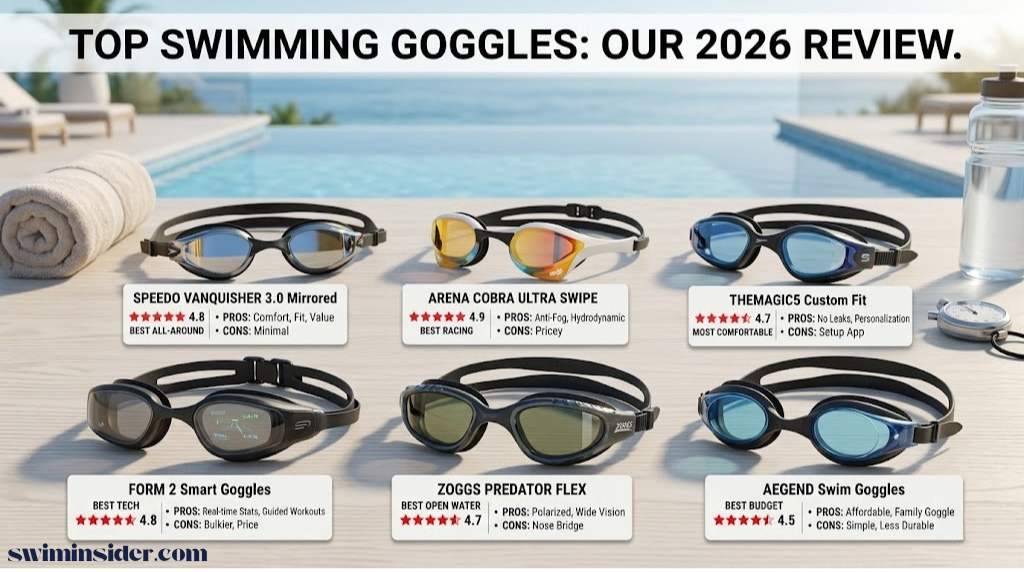
There is a moment every swimmer knows — you push off the wall, glide through that first underwater stretch, and suddenly you can’t see a thing because your goggles decided this was the lap to fog up, flood, or dig a ring into your orbital bones. A great pair of swim goggles eliminates all of that. The wrong pair turns every training session into a headache.
We spent weeks evaluating the most popular swimming goggles available today, looking at real-world anti-fog durability, gasket comfort over extended wear, strap adjustment systems, and lens clarity across different lighting conditions. Whether you are a recreational lap swimmer, a competitive racer, a triathlon athlete, or buying your child their first pair, this guide has a specific, tested recommendation for you.
Swimming goggles are one of those deceptively simple pieces of gear where tiny differences in construction lead to massive differences in experience. Cheap doesn’t always mean bad, and expensive doesn’t always mean best. The goal of this guide is to match you with the right pair for your actual swimming life — not just the pair with the flashiest marketing.
At a Glance
Quick Picks: Best Swimming Goggles
Short on time? Here are our top picks across the most important categories.
Lap Swimmers
Rantizon or Aegend Adult for all-session comfort
Competitors
Speedo Vanquisher 2.0 for low-profile speed
Open Water
Aegend UV with tinted lenses + UV400
Kids
Vvinca for shatterproof lenses + easy strap
Budget Picks
NSSIW or Zeligerstar deliver above their price
Foundation
Why the Right Swimming Goggles Actually Matter
Most swimmers underestimate how much their goggles affect training quality. A leaking pair doesn’t just irritate your eyes — it interrupts your stroke rhythm, forces you to pause at the wall, and can cause you to skip workouts entirely. Eye irritation from repeated chlorine exposure is a real cumulative health issue, and a proper seal is the first line of defense.
Beyond protection, goggles directly influence your visibility underwater, which affects everything from tracking the black line on the pool floor to sighting buoys in open water. A pair with poor optical quality — lens distortion, heavy glare, or inadequate light transmission — means your brain is spending processing power correcting what your eyes are seeing, rather than focusing on stroke mechanics or pace.
Fit determines everything else. A goggle that fits perfectly needs minimal strap tension to seal, which means less headache pressure over long sessions. One that doesn’t fit right gets cranked down until it leaves visible ring marks around your eyes — a sign the gaskets are working against you, not for you. Understanding how to get the right goggle tightness is more nuanced than most buyers realize, and we’ll cover it fully later in this guide.
Seals eyes from prolonged chemical exposure during training.
High-grade lenses reduce distortion for better underwater navigation.
Factory coatings that outlast multiple sessions without re-treatment.
Essential for outdoor pools and open water to prevent long-term damage.
Low-drag designs keep you faster through the water, especially for racing.
Silicone gaskets mold to your face without causing pain over long sessions.
If you are still figuring out what kind of swimmer you are or what type of goggles suits your needs, our guide on how to choose swimming goggles walks through every factor in detail. For specific sub-categories, we also have dedicated guides for lap swimming goggles and open water swimming goggles.
Pick #1 — Editor’s Choice
Best Overall: Rantizon Anti-Leak Swimming Goggles
Rantizon Swim Goggles — Anti-Leak, Anti-Fog, UV400

The Rantizon goggles represent a sweet spot that is genuinely hard to find: premium-feeling construction at a realistic price, with an anti-fog coating that holds up across multiple consecutive sessions. The silicone gaskets curve to the orbital bone rather than sitting flat against it, which is why they seal better than most goggles in this price range without requiring aggressive strap tension.
Lens clarity is excellent for the category — a true UV400 lens with minimal optical distortion, which means the pool bottom and lane ropes stay sharp rather than warped. The adjustable nose bridge is a genuine differentiator; most budget goggles treat nose fit as an afterthought, but the Rantizon’s nose bridge comes with three size options, giving you meaningful customization between faces that are closer-set or wider-set.
✓ Pros
- Anti-fog coating genuinely lasts multiple sessions
- Silicone gaskets seal without over-tightening
- Adjustable 3-size nose bridge included
- UV400 for indoor and outdoor use
- Comfortable for long sessions
✗ Cons
- Not designed for competitive racing (higher profile)
- Strap adjustment wheel takes practice initially
- Foam case feels lightweight
Best Overall Pick — Great anti-fog, great seal, ships fast.
Check Price on Amazon →For most recreational lap swimmers, the Rantizon will end the search. It performs where it counts — at the pool — and it is priced to let you replace it without regret when the anti-fog coating eventually fades. If you have ever struggled with leaking goggles, our deep-dive on the best non-leaking goggles covers the seal engineering behind models like this one in more detail.
Pick #2 — Best Value
Best Budget Pick: NSSIW Adult Swim Goggles
NSSIW Adult Swim Goggles — Wide Vision, Easy Adjust

The NSSIW goggles are the strongest case we found for the argument that budget swim goggles have gotten genuinely better. A few years ago, this price tier reliably meant a gasket that lasted a couple of uses and lenses that fogged from lap one. The NSSIW breaks that pattern with a curved lens profile that offers noticeably more peripheral vision than standard budget frames, and a silicone seal that holds across a full hour of lap swimming without flooding.
The strap system uses a simple but effective quick-adjust clip that even wet hands can work reliably — a real quality-of-life feature that cheap goggles often botch. The anti-fog coating is thinner than you get on a premium pair, so plan to use an anti-fog spray after about ten sessions to extend its life. But at this price, that is a completely reasonable trade-off.
✓ Pros
- Excellent value for the performance delivered
- Wider lens view than most budget competitors
- Easy strap adjustment even with wet hands
- Good color selection available
✗ Cons
- Anti-fog wears faster than premium options
- Nose bridge is fixed (no size options)
- Plastic buckle feels less durable
Best budget option — solid performance, wallet-friendly price.
Check Price on Amazon →New to the sport? The NSSIW is a low-risk starting point that gives you decent optics and comfort without the sting of spending heavily on gear before you know your preferences. For a more complete guide to getting started, our best goggles for beginner swimmers article covers what to prioritize when you are just building your water confidence.
Pick #3 — Premium Adult Choice
Best for Adults: Aegend Adult Swim Goggles (Anti-Fog Pro)
Aegend Adult Goggles — Premium Anti-Fog & UV400

Aegend has built a strong reputation in the swim accessories category, and this adult model demonstrates why. The anti-fog coating on this version is among the most durable we tested at this mid-range price point — genuinely holding across 15+ consecutive pool sessions without needing any maintenance or re-treatment. That durability comes from a multi-layer coating process rather than a simple surface treatment.
The split headband is a feature typically associated with higher-priced goggles: two separate straps that wrap around the head rather than one flat band, which distributes pressure more evenly and essentially eliminates the “headache strap” problem. Combined with the included multiple nose bridge sizes, this pair adapts well to a wider range of adult faces than most competitors in its class.
✓ Pros
- Exceptional anti-fog longevity (15+ sessions)
- Split strap reduces pressure and headaches
- Multiple nose bridge sizes included
- Crystal-clear lens with UV400 protection
- Excellent value-to-quality ratio
✗ Cons
- Slightly larger frame (not ideal for racing)
- Can feel stiff on smaller adult faces
Top adult pick — durable anti-fog that actually lasts.
Check Price on Amazon →If you have been frustrated by anti-fog coatings that fail after two sessions, the Aegend adult model is the most compelling upgrade we found. The difference in coating quality is not marketing — it is plainly apparent after a month of regular use. Women swimmers looking for a comfortable, well-fitting option should also check our dedicated guide to the best swimming goggles for women, where fit and comfort characteristics differ meaningfully by model.
Pick #4 — Top Kids’ Goggle
Best for Kids: Vvinca Kids Swim Goggles
Vvinca Kids Goggles — Shatterproof, Toddler-Friendly

Finding swim goggles for children is a different challenge than finding adult goggles, and most parents learn this the frustrating way. The frame geometry matters enormously — a child’s orbital bones are not scaled-down adult versions, and a goggle designed for adults will never seal properly on a smaller face no matter how tight you crank the strap. The Vvinca goggles are purpose-built for younger swimmers, with a narrower frame profile, shorter nose bridge, and softer gaskets designed to work with smaller facial structures.
The shatterproof lens is a non-negotiable feature for kids in our view. Pool decks are wet, children drop things, and safety glass that holds rather than fragments is simply the right call. The elastic strap system is another standout — it goes on quickly and stays on without constant readjustment, which matters enormously when you are helping a five-year-old get ready for swim lessons in thirty seconds.
✓ Pros
- Shatterproof lenses for pool deck safety
- Designed specifically for kids’ facial geometry
- Stays on without constant readjustment
- Soft silicone gaskets for comfortable extended wear
- Available in kid-friendly colors
✗ Cons
- Too small for adult heads
- Anti-fog coating thinner than adult premium models
Best kids’ pick — safe lenses, right-sized fit, easy on/off.
Check Price on Amazon →For parents shopping for young swimmers, also check our comprehensive guides to the best swimming goggles for kids and the best swimming goggles for toddlers, which include age-specific sizing guidance and additional model recommendations beyond what we cover here.
Pick #5 — Competitive Racing
Best for Racing: Speedo Vanquisher 2.0
Speedo Vanquisher 2.0 — Low-Profile Race Goggle

The Speedo Vanquisher 2.0 has been a staple in competitive swim programs for years, and it earns that position through straightforward engineering excellence. The hydrodynamic profile sits noticeably flatter against the face than recreational goggles, reducing drag at higher speeds — a real performance factor for anyone racing or training at intensity. The wide-angle lens gives you excellent peripheral vision without the bulk of a recreational frame.
The 4-point adjustment system — adjustable at both the nose bridge and the strap — means you can dial in the fit with a precision that most goggles simply do not offer. The result is a seal that does not require excessive tightening to hold, which is particularly valuable during turn sequences and race dives where standard goggles get knocked loose. If you are a serious pool swimmer, the full Speedo Vanquisher review covers performance data in more depth.
✓ Pros
- Hydrodynamic race profile reduces drag
- Wide-angle lens for excellent peripheral vision
- 4-point precision adjustment
- Trusted by competitive swimmers globally
- Durable — season-long lifespan under regular race training
✗ Cons
- Tighter fit not suitable for casual or long recreational swims
- Not ideal for beginners who prefer a softer seal
- Higher price point than recreational options
The racer’s standard — low-drag, precision fit, trusted by competitive swimmers.
Check Price on Amazon →For competitive swimmers evaluating the full landscape, our best competitive swimming goggles guide includes timing data comparisons and other race-focused models worth considering. You might also enjoy the Arena Cobra Ultra vs Speedo Fastskin comparison if you are deciding between top-tier racing options. And for brand-loyal Speedo fans, our dedicated best Speedo swimming goggles roundup evaluates the full range.
Pick #6 — Triathlon & Open Water
Best for Triathlons: Aegend UV Protection Triathlon Goggles
Aegend Swimming Goggles — UV400, Triathlon Multi-Color

Triathlon swimming demands something different from standard pool goggles. You need UV protection to handle open water sun exposure, tinted lenses to reduce glare off water surfaces, a quick-release strap you can yank off in transition without fumbling, and enough seal integrity to hold through a flying start in choppy conditions with dozens of other swimmers around you. The Aegend Triathlon model addresses all four of those requirements directly.
The lens tinting is available in multiple options — smoke, blue mirror, and clear — so you can match the goggle to your race conditions. The UV400 filter is essential for any extended open water swim where reflected sunlight becomes a visibility and eye health issue. The quick-release strap mechanism saves seconds in T1, which is not nothing over the course of a race. For open water sighting practice and technique, our open water goggle guide covers additional considerations.
✓ Pros
- Purpose-built for triathlon demands
- Multiple tint options for different conditions
- Quick-release strap for faster transitions
- UV400 protection for extended outdoor exposure
- Strong seal for chaotic open water starts
✗ Cons
- Tinted lenses make indoor pool visibility darker
- Quick-release mechanism adds slight bulk
Built for race day — UV400, tinted lenses, fast transition strap.
Check Price on Amazon →Triathletes who want the full competitive picture should also read our best triathlon swimming goggles guide, which factors in transition speed, open water sighting lens tints, and durability across multi-sport race seasons.
Buyer’s Guide
How to Choose the Right Swimming Goggles for You
Buying goggles online means you cannot put them on before purchasing. That puts extra weight on understanding the specifications that predict fit and performance. Here are the factors that matter most — and how to read them before you buy.
Gasket Material and Shape
Silicone gaskets outperform foam or rubber at every level. Silicone conforms to the face over time, rebounds to shape after compression, and resists pool chemicals far better than alternatives. Within silicone, a contoured or curved gasket profile will fit more faces than a flat gasket, because orbital bones are not flat surfaces. When a product listing says “dual-layer silicone seal,” that is a meaningful indicator of quality — the inner layer softens against skin while the outer layer maintains structural seal.
Lens Type and Tinting
Indoor pool use calls for clear or light-tinted lenses. The environment is already lower-light than outdoors, so darker tinting just reduces visibility further without any glare-reduction benefit. Outdoor use, particularly in sunny conditions or open water, benefits from smoke or blue mirror tinting that cuts surface glare. UV400 is the protection standard to look for — it blocks 99% of harmful UV-A and UV-B rays. Our polarized goggle guide explains when polarization specifically is worth the upgrade over standard tinting.
Nose Bridge Fit
This is the most underrated factor in goggle shopping. The nose bridge sets the gap between the two lenses, and if that gap does not match your anatomy, the seals cannot do their job regardless of gasket quality. A too-wide nose bridge pushes the lenses too far apart, creating gaps at the inner corners. Too narrow, and the goggles feel pinched or the lenses sit at the wrong angle. The best goggles include 2–3 interchangeable nose bridge sizes in the box. If a product only comes with a fixed nose bridge, check the dimensions carefully against your own face measurements.
Strap System
Straps should be adjustable with wet hands. Test this in the description — look for quick-adjust buckle systems, ideally at both the back of the head and through the lens frame. A single-adjustment buckle at the back is functional but less precise. The goal is to reach a balanced, even tension around the full perimeter of the seal without any pull point being tighter than others. For more on this, our guide on how tight swimming goggles should be gives clear benchmarks.
Anti-Fog Coating Quality
All new goggles have some anti-fog coating. The meaningful question is how long it lasts. Entry-level coatings often begin failing after 5–10 swims. Mid-range coatings, like those on the Aegend adult model, realistically hold for 15–25 sessions. Never wipe the inside of the lens — this removes the coating faster than anything else. Rinse in cold water and air dry. If your goggles are fogging despite a factory coating, our guide on how to stop goggles from fogging covers the best treatment options. On the maintenance side, how to clean swimming goggles properly is equally important.
Frame Profile and Drag
Recreational goggles prioritize comfort and wide field of view, so they have larger, slightly bulkier frames. Race goggles have low-profile frames that minimize drag at speed. If you are training competitively, the drag difference across a 1500m swim is real. If you are doing casual lap swimming, the comfort difference in favor of the larger recreational frame is more relevant to your actual experience. The most comfortable swimming goggles tend to sit in the recreational frame category.
Deep Dive
Swimming Goggle Lens Types: What Every Swimmer Should Know
The lens is the most technically varied component of a swim goggle, and understanding the options saves you from buying the wrong pair for your environment.
| Lens Type | Best Environment | Light Transmission | UV Protection | Who Needs It |
|---|---|---|---|---|
| Clear | Indoor pools, night swimming | 90–99% | Optional | All indoor swimmers |
| Light Blue Tint | Indoor + mixed light | 70–85% | UV400 often included | Swimmers in varied conditions |
| Smoke / Dark Tint | Outdoor pools, bright sun | 25–45% | UV400 essential | Outdoor recreational swimmers |
| Blue Mirror | Open water, ocean, lakes | 20–40% | UV400 standard | Triathletes, open water swimmers |
| Polarized | Bright outdoor glare conditions | 15–35% | UV400 standard | Open water, especially at noon |
| Photochromic | Transitions from indoor/outdoor | Adjusts automatically | UV400 | Multi-environment swimmers |
One common misconception: mirrored and polarized are not the same. Mirrored lenses have a reflective coating on the outside that looks sporty and reduces some glare. Polarized lenses have a filter embedded in the lens material that specifically blocks horizontal light waves — the type created when sunlight reflects off a water surface. For true glare elimination in open water, polarized is meaningfully superior. Our best polarized swimming goggles guide explores this technology in detail.
Practical Guide
Getting the Right Goggle Fit: The Press Test and More
No amount of anti-fog coating or expensive lenses matters if your goggles do not fit your face. A properly fitting goggle forms a watertight seal at very low strap tension, meaning your eyes stay comfortable and clear for the full duration of your swim without headaches or pressure marks.
The Press Test
This is the single most reliable pre-purchase fit check when buying in person, and a useful benchmark for online purchases to revisit when your goggles arrive. Hold the goggle lenses against your eyes without placing the strap on your head. Press lightly and release. If the goggles hold suction for 2–4 seconds before releasing, the lens size and frame curve match your orbital shape. If they fall away immediately, the lens is either too large or the curve does not match your face.
Adjusting for Nose Bridge Width
When you first put on your new goggles, the lens edge alignment tells you if the nose bridge is right. The inner edge of each lens should sit at the inner corner of your eye — not overlapping the bridge of your nose, and not extending beyond the inner corner with a gap. If you see a gap at the inner corner, go to a narrower nose bridge. If the lens presses into the bridge of your nose, go wider. For more detail on this, our guide to goggles for wide faces is particularly relevant.
Diagnosing a Leaking Goggle
Leaks almost always come from one of three sources: wrong lens size, wrong nose bridge width, or strap overtightening. Paradoxically, cranking the strap too tight can actually cause leaks by distorting the gasket shape. The gasket needs gentle, even contact with your face — not compression. If your goggles leak on one side only, check that the strap tension is equal on both sides. If they leak in the inner corners, your nose bridge is too wide. Our guide on why swimming goggles leak is the most complete diagnostic resource we have for this problem.
More Picks to Consider
Also Tested: Additional Goggles Worth Knowing
Aegend Anti-Fog Waterproof Swim Goggles
The Aegend waterproof variant offers an upgraded silicone seal specifically engineered to hold under greater water pressure — useful for competitive swimmers who execute powerful underwater dolphin kicks after turns. The anti-fog coating employs a double-treatment process, and real-world longevity reflects that: expect 20+ sessions before you notice meaningful degradation.
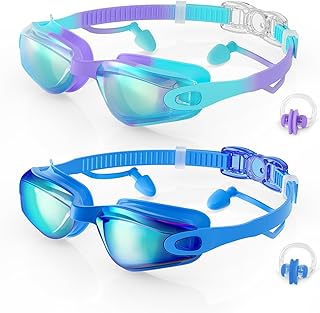
Aegend Anti-Fog Waterproof — double-coated lenses, superior seal under water pressure.
Check Price on Amazon →Aegend Kids Swimming Goggles (Easy-Adjustable)
Another strong option from Aegend, this time engineered for children’s swimming lessons and recreational pool use. The easy-adjust buckle system is specifically designed to be operated by adult hands quickly — a genuinely useful feature when you are managing goggle adjustments for a seven-year-old in a crowded pool area. Soft silicone gaskets and shatterproof lenses make this a safe, comfortable choice for regular swim lesson use.

Aegend Kids — easy adjust, soft seal, shatterproof lenses for swim lessons.
Check Price on Amazon →Zeligerstar Anti-Fog Swimming Goggles
The Zeligerstar punches above its price category in one specific way: the optical lens quality is noticeably better than similarly-priced competitors. The lenses have minimal distortion at the edges, which gives you a wider, cleaner peripheral view. Anti-fog performance is solid for the category. This is an excellent choice for budget-conscious adult swimmers who want better clarity than the absolute entry level provides.

Zeligerstar — standout optical clarity at a budget-friendly price.
Check Price on Amazon →Mirror Copper Anti-Fog Swim Goggles
For swimmers who want a performance aesthetic alongside solid function, the copper mirror lens option here delivers a striking look with practical outdoor performance. The yellow-copper tint enhances contrast in variable light conditions — particularly effective in early morning or late afternoon outdoor sessions where flat light makes it harder to track lane ropes. Worth considering if outdoor training is a regular part of your routine.

Copper Mirror Lens — contrast-enhanced outdoor performance with a bold aesthetic.
Check Price on Amazon →For swimmers who need corrective lenses, prescription goggles are a genuine game-changer. Our guide to the best prescription swimming goggles covers diopter ranges, quality standards, and the most reputable options currently available. And for swimmers who have built a preference for Speedo’s broader lineup beyond the Vanquisher, our best Speedo goggles roundup covers the full range.
Side-by-Side
Full Comparison: Best Swimming Goggles
Use this table to compare our top picks across the features that matter most for your swimming context.
| Goggle | Best For | Anti-Fog | UV400 | Adj. Nose Bridge | Lens Profile | Kids Safe |
|---|---|---|---|---|---|---|
| Rantizon | Overall Best | ✓✓✓ | ✓ | ✓ (3 sizes) | Recreational | ✓ |
| NSSIW | Budget Pick | ✓✓ | ✓ | ✗ | Wide View | ✓ |
| Aegend Adult | Adults / Long Sessions | ✓✓✓ | ✓ | ✓ (multi) | Crystal Wide | ✗ |
| Speedo Vanquisher | Racing / Competitive | ✓✓ | ✓ | ✓ | Low-Profile Race | ✗ |
| Vvinca Kids | Children / Toddlers | ✓✓ | ✓ | ✓ | Kids Frame | ✓ (designed for) |
| Aegend Triathlon | Triathlon / Open Water | ✓✓ | ✓ UV400 | ✓ | Tinted Multi | ✗ |
| Zeligerstar | Budget + Clear Optics | ✓✓ | ✓ | ✗ | Wide Clarity | ✓ |
| Copper Mirror | Outdoor Contrast | ✓✓ | ✓ | ✗ | Mirror Tinted | ✗ |
| Aegend Kids | Swim Lessons | ✓✓ | ✓ | ✓ | Kids Wide | ✓ (purpose-built) |
Anti-fog ratings: ✓ = 5–10 sessions, ✓✓ = 10–20 sessions, ✓✓✓ = 20+ sessions before noticeable degradation.
Extend Goggle Life
Caring for Your Goggles: How to Make Them Last
The single most expensive habit in swim gear is replacing goggles that still have life in them because they were not maintained correctly. Proper care extends anti-fog coating life, gasket elasticity, and strap durability — all at zero cost beyond a few extra seconds after each session.
The Rinse Rule
Rinse your goggles in cold, clean water immediately after every swim. Chlorine and salt water both degrade silicone gaskets and anti-fog coatings when left to dry. Cold water is important — hot water accelerates coating breakdown. Never use soap on the inside of the lenses; even gentle soaps strip anti-fog treatments in one wash.
Air Dry, Never Towel
Shake off excess water and set your goggles to air dry in a well-ventilated spot out of direct sunlight. UV exposure degrades rubber and silicone over time, and heat warps lens frames. A mesh goggle bag or a goggle case with ventilation holes works perfectly for gym bags. Towel drying the inside of the lens is the fastest way to destroy your anti-fog coating — even soft microfiber towels abrade the coating at the microscopic level.
Storage
Store goggles in a rigid case when transporting them in a bag with other gear. Compression or impact from other items in a bag can crack lens frames, permanently damage the gasket shape, or snap nose bridge connectors. Most quality goggles come with a case — use it. When goggles are at home, a simple hook mount or open shelf is fine; just keep them away from heat sources like radiators or direct window light.
When fog starts breaking through despite proper care, it is time for maintenance treatment rather than replacement. Our detailed guide on preventing goggle fog covers the best commercial treatments and even home remedies, and our cleaning guide walks through the full maintenance routine.
FAQ
Swimming Goggles: Frequently Asked Questions
The Bottom Line on Swimming Goggles
The right pair of swimming goggles is one of the highest-value purchases in any swimmer’s kit, because its impact is felt on every single lap. A pair that fits, seals, and stays clear transforms the experience of being in the water — and a pair that does not does the opposite just as consistently.
Our top pick for most swimmers remains the Rantizon Anti-Leak Goggles, which deliver genuine anti-fog durability, a customizable nose bridge, and a silicone seal that earns its name. Serious pool training demands the Speedo Vanquisher. Kids need the Vvinca. Triathletes should look at the Aegend UV. And swimmers on a budget can get far more than they expect from the NSSIW.
Whichever direction you go, use the press test before committing to a fit, respect the anti-fog coating maintenance rules, and remember that the strap is your last adjustment — not your first defense against leaks. Good goggles properly fitted at light tension will outlast and outperform expensive goggles cranked down to compensate for a bad seal.
Shop Our Top Pick on Amazon →
Pingback: Can I Swim With My Apple Watch? What's Safe & How