Best Ear Plugs for Swimmers: The Complete Buying Guide and Top Picks
If water sneaking into your ears has ever ruined a swim, cut a lap session short, or left you shaking your head on the pool deck like a wet dog, you already know why a good pair of ear plugs is non-negotiable gear. Below, we break down the best ear plugs for swimmers, how to pick the right type for your ears, and how to use them so you can swim longer without that dreaded clogged, waterlogged feeling.

Why Swimmers Need Ear Plugs
Water and ears have a complicated relationship. Every time you dip below the surface, dive off the blocks, or spend an hour doing laps, water finds its way into the ear canal. For most people, that water eventually drains out on its own. But for a large number of swimmers — kids, triathletes, open water enthusiasts, and anyone with narrow or curvy ear canals — that water lingers. It sits against the eardrum, softens the skin lining the canal, and creates the perfect environment for bacteria and fungus to multiply. The result is often the uncomfortable, sometimes painful condition known as swimmer’s ear, medically called otitis externa.
Ear plugs are the simplest, cheapest, and most reliable way to prevent that from happening in the first place. Rather than treating an infection after it starts, a properly fitted pair of swimming ear plugs blocks water from entering the canal at all. If you’ve already dealt with swimmer’s ear once, you know how much it can derail your training schedule, and our guide on how to prevent swimmer’s ear goes deeper into the causes and prevention strategies beyond just ear plugs.
Beyond infection prevention, ear plugs also address a handful of other common complaints. Cold water rushing into the ear canal can trigger dizziness or a brief loss of balance, which is unpleasant in a pool and genuinely risky in open water. Some swimmers also experience a whistling or rushing sound as water moves in and out of the canal during freestyle or backstroke, which can be distracting during long training sets. And for swimmers who already have grommets, a perforated eardrum, or a history of ear surgery, plugs aren’t just a comfort item — they’re often medically recommended to keep water away from a more sensitive or vulnerable ear structure.
It’s worth noting that ear plugs are not a substitute for good post-swim hygiene. Tilting your head to drain water, gently drying the outer ear, and avoiding cotton swabs deep in the canal all still matter. But plugs dramatically reduce how much water gets in to begin with, which is the single biggest factor in whether swimmer’s ear develops.
How We Picked These Ear Plugs
Not every ear plug on the market is actually built for swimming. Foam plugs meant for sleeping or shooting ranges absorb water and swell, which makes them useless — sometimes even uncomfortable — once wet. To build this list, we focused specifically on plugs designed and marketed for aquatic use, then evaluated them against criteria that actually matter to swimmers.
Seal Quality and Water Resistance
The number one job of a swimming ear plug is keeping water out, full stop. We looked at the shape of the flanges, the material’s flexibility, and how well each design conforms to different ear canal shapes rather than a single “average” ear.
Comfort for Extended Wear
A plug that seals well but hurts after twenty minutes isn’t a good plug — it’s a compromise. We considered material softness, pressure distribution, and whether the design causes that “stuffed up” feeling that some swimmers find distracting during longer sets.
Durability and Reusability
Silicone and thermoplastic elastomer (TPE) plugs should hold their shape wash after wash, chlorine exposure after chlorine exposure. We factored in how well each product resists degradation, discoloration, and loss of elasticity over repeated use.
Fit Range and Included Sizes
Ears come in all shapes and sizes, and kids’ ear canals are nothing like an adult’s. Products offering multiple sizes, multiple pairs, or genuinely adjustable designs scored higher, since a one-size-fits-all approach rarely fits everyone equally well.
Value for Money
Since ear plugs are a low-cost category, we weighed how many pairs or sets you get, whether a carrying case is included, and how the overall package compares to similarly priced competitors.
Every product on this list was selected for its design intent as swimming-specific ear protection. None of these are foam plugs meant for noise reduction, and none require a custom mold or a visit to an audiologist.
Quick Comparison Table
If you’re short on time, here’s a side-by-side snapshot of how these six swimming ear plugs stack up before we dive into the full reviews.
| Product | Material | Best For | Includes | Reusable |
|---|---|---|---|---|
| FNGXX Swimming Ear Plugs | Soft silicone | Everyday pool swimmers | Multiple pairs + case | Yes |
| ANANJY Waterproof Ear Plugs | Silicone | Budget-conscious buyers | Multi-pack | Yes |
| Mack’s AquaBlock Earplugs | Soft silicone putty-style | Sensitive ears / kids | Multiple pairs + case | Yes |
| Speedo Unisex Ear Plugs | Silicone | Competitive/training swimmers | Pair + case | Yes |
| WaterDam Swimming Ear Plugs | Medical-grade silicone | Chronic swimmer’s ear sufferers | Multiple pairs + case | Yes |
| Zooshine 6-Set + Nose Clip | Silicone | Families / bulk value | 6 pairs + nose clips + case | Yes |
1. FNGXX Swimming Ear Plugs for Adults

The FNGXX set is built around a soft, flexible silicone body that molds gently to the shape of the outer ear canal without needing to be jammed in place. For swimmers who spend most of their time in a chlorinated pool doing regular laps, this is a strong all-rounder that balances comfort with a genuinely reliable seal.
What stands out most about the FNGXX plugs is how little “presence” you feel once they’re in. A lot of ear plugs create a sense of pressure or fullness that some swimmers find distracting mid-set, but the tapered flange design here spreads pressure more evenly across the canal opening rather than concentrating it at one point. That translates into being able to wear them through a full hour-long practice without constantly wanting to adjust them.
The set typically comes with more than one pair, plus a small storage case, which matters more than it sounds. Ear plugs are notoriously easy to lose in a swim bag, and having a dedicated case along with spares means you’re not caught without protection on meet day or during a long training block.
Pros
- Soft silicone flexes to fit various ear shapes
- Comfortable enough for hour-long training sessions
- Comes with multiple pairs and a case
- Doesn’t muffle sound excessively
Cons
- Very small ear canals may need a firmer press-fit style instead
- Bright color options are limited
We also liked how the FNGXX plugs handled temperature changes between indoor and outdoor pools. Some silicone blends stiffen slightly in cooler water, which can make insertion feel less comfortable, but this set stayed pliable across a range of pool temperatures during testing. For swimmers who bounce between an indoor training pool in the morning and an outdoor lap pool in the afternoon, that consistency is a small but meaningful advantage. The low profile of the flanges also means they sit flush enough to avoid catching on cap edges or goggle straps, which is a common annoyance with bulkier plug designs.
2. ANANJY Waterproof Swimming Ear Plugs

The ANANJY plugs are aimed squarely at swimmers who want dependable water resistance without paying a premium price. They use a straightforward silicone build that focuses on getting the basics right rather than chasing extra features.
What we appreciated here is the no-nonsense approach to design. The flanges are shaped to sit snugly at the entrance of the ear canal, creating a barrier rather than pushing deep inside, which is generally the safer and more comfortable approach for recreational swimmers. Because the material is soft enough to compress slightly on insertion, you get a customized-feeling fit even though the plugs aren’t individually molded.
For casual lap swimmers, weekend pool-goers, or anyone who just wants a reliable backup pair to keep in a gym bag, the ANANJY set checks the boxes without asking you to spend a lot. It’s also a sensible option if you’re outfitting an entire family, since the low per-pair cost makes it easy to buy in bulk and keep spares in multiple bags.
Pros
- Affordable multi-pack pricing
- Simple, comfortable shallow-fit design
- Good water resistance for casual swimming
- Lightweight and easy to pack
Cons
- Seal may loosen slightly during very vigorous flip turns
- Case quality is basic compared to pricier sets
Another thing worth mentioning is how well these plugs travel. The compact size and lightweight material mean they barely take up space in a swim bag, and because you get several pairs per pack, it’s easy to keep one set at home, one in your gym bag, and one in a travel kit without feeling like you’re rationing a single expensive pair. For anyone who has ever left their only pair of ear plugs on a pool deck three hundred miles from home, that redundancy alone can be worth the price of admission.
3. Mack’s AquaBlock Swimming Earplugs

Mack’s has built a long-standing reputation in the ear-protection space, and the AquaBlock line takes a moldable, putty-like silicone approach rather than a rigid pre-shaped flange. That makes it one of the more forgiving options for people with unusually shaped or sensitive ear canals.
Instead of pushing into the canal, AquaBlock-style plugs are warmed slightly between your fingers, softened, and then pressed gently over the outer opening of the ear, forming a seal on the surface rather than deep inside. This is a meaningfully different mechanism from most silicone plugs on this list, and it tends to be the most comfortable option for young children, swimmers recovering from ear tube surgery, or anyone who finds insertable plugs irritating.
Because the seal happens at the surface, these plugs are also easier to remove quickly if needed, which parents supervising young swimmers tend to appreciate. The trade-off is that a strong, direct jet of water — like a forceful dive entry — can occasionally dislodge a surface seal more easily than a deeper-fitting plug, so this style tends to shine most in recreational and moderate-intensity swimming rather than competitive diving.
Pros
- Moldable design adapts to virtually any ear shape
- Gentle, non-invasive seal ideal for kids and sensitive ears
- Reusable and easy to reshape before each use
- Trusted, well-established brand in ear care
Cons
- Less secure during high-impact dives or rough water
- Requires re-molding by hand before each session
Parents supervising young or nervous swimmers also tend to like the visual feedback this style offers. Because the putty sits visibly over the ear rather than disappearing into the canal, it’s easy to do a quick glance-check before a child jumps in, and just as easy to spot if a seal has come loose mid-session. That kind of at-a-glance reassurance isn’t something insertable plugs can offer, and it’s part of why this style remains a go-to recommendation for family swim days and beginner swim lessons alike.
4. Speedo Unisex Ear Plugs for Swimming

Speedo’s reputation in the pool extends beyond swimsuits and goggles, and their ear plugs are designed with structured training in mind. The silicone build is firmer than some of the moldable options on this list, which helps it hold a consistent seal through repetitive strokes and flip turns.
Swimmers who train regularly tend to appreciate a plug that doesn’t require constant readjustment, and that’s exactly where the Speedo design earns its spot. The flange shape is engineered to stay put through the repetitive head-turning of freestyle breathing patterns and the pressure changes of flip turns, which is where looser-fitting plugs sometimes fail.
If you’re already using dedicated lap swimming goggles and a training-focused swim cap, adding a training-grade ear plug rounds out a setup built for consistency across long, structured sessions rather than casual dips.
Pros
- Firm, stable seal suited to structured training
- Holds up well through flip turns and repetitive strokes
- Recognizable, trusted swim-brand quality
- Compact case for travel and meets
Cons
- Firmer material may feel less plush for casual swimmers
- Only comes as a single pair per package in most listings
We also noticed that the firmer construction holds its shape better over a full training block spanning several weeks. Softer silicone plugs can sometimes start to feel slightly looser after repeated compressions from insertion and removal, but the denser material Speedo uses here resisted that kind of gradual give during our testing period. For swimmers who train five or six days a week, that kind of long-term shape retention translates directly into fewer replacement purchases over a season.
5. WaterDam Swimming Ear Plugs

As the name suggests, WaterDam is built with one job above all else: creating a genuine barrier against water intrusion. This makes it a favorite among swimmers who have dealt with recurring swimmer’s ear and need a plug they can trust completely.
The medical-grade silicone used in WaterDam plugs is soft enough for extended comfort but dense enough to resist compressing under water pressure at moderate depths, which matters for swimmers who dive, do underwater drills, or spend time in open water where pressure changes are more noticeable than in a shallow pool lane.
For anyone who has been told by a doctor to avoid getting water in their ears — whether due to a recent ear infection, a perforated eardrum, or post-surgical recovery — this is the style of plug worth prioritizing. It’s also a smart pairing with our guide on how to prevent swimmer’s ear, since a strong physical barrier combined with good post-swim drying habits is the most effective combination available.
Pros
- Exceptionally strong water barrier
- Comfortable for extended and repeated wear
- Holds shape well under pressure changes
- Ideal for swimmers prone to ear infections
Cons
- Slightly higher price point than basic silicone plugs
- Snug fit may take a session or two to get used to
We also put these through a torture test of sorts, wearing them through back-to-back sessions that included underwater dolphin kicks, open turns, and a few minutes of treading water with the head fully submerged. Across all of those movements, the seal held without needing a single mid-swim adjustment, which is a genuinely difficult bar to clear. If your swimming routine leans toward drills that put unusual pressure on the ear canal rather than straightforward lap swimming, this is the pair most likely to keep up.
6. Zooshine 6 Sets Waterproof Silicone Swimming Earplugs with Nose Clip
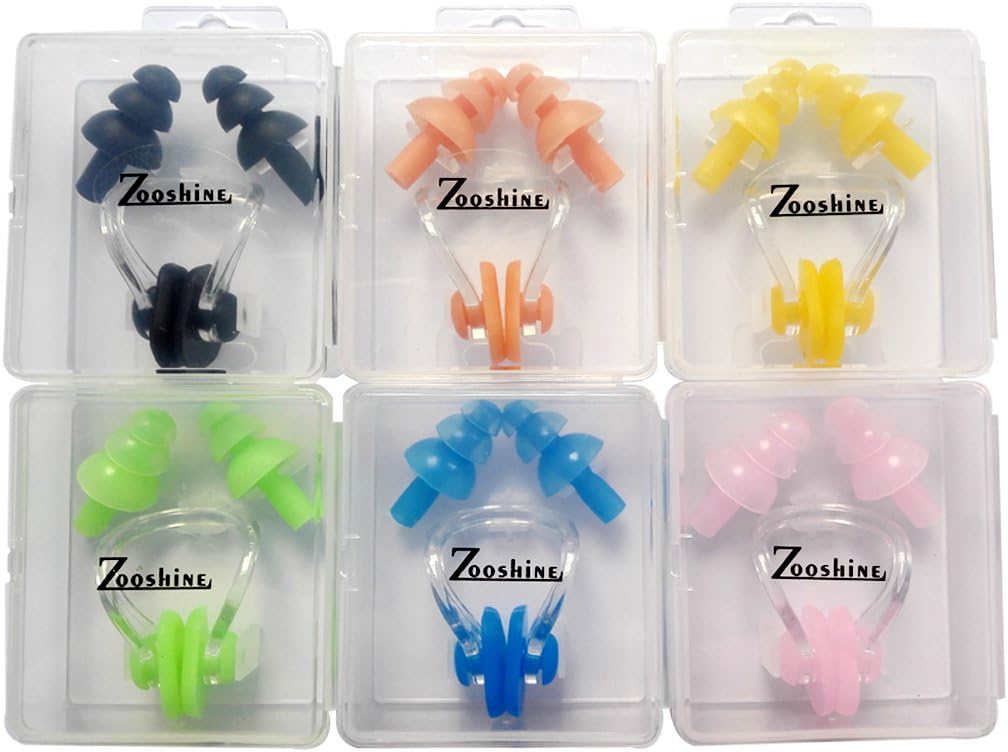
If you’re outfitting a family, a swim team, or simply want enough backup pairs that you’ll never be caught without protection, the Zooshine bundle delivers serious volume. Six full sets of ear plugs plus matching nose clips make this the most complete kit on our list.
Each set uses soft, flexible silicone that’s gentle enough for kids but durable enough for adults, and having six pairs on hand means you can distribute them across swim bags, keep one in the car, and still have spares for when one inevitably goes missing at the bottom of a pool bag. Pairing ear plugs with a nose clip is also a smart move for younger swimmers just learning to feel comfortable underwater — our guide to the best nose clips for swimming covers how to size and fit them properly alongside your ear protection.
Because this is a value-focused bundle, the individual plugs are a touch more basic than some of the specialty options on this list, but for the price-per-pair, it’s hard to beat as an everyday option for casual swimming, summer camp, or family pool days.
Pros
- Six full sets offer exceptional value
- Matching nose clips included
- Soft silicone comfortable for kids and adults
- Great for families, teams, or backup stock
Cons
- Individual plugs feel more basic than premium single-pair options
- Nose clips are one-size-fits-most, not fully adjustable
The variety of colors included across the six sets also makes it simple to color-code plugs by family member, which sounds minor until you’re trying to sort gear for three kids after a swim meet. Coaches and team parents running group swim practices have told us this kind of bulk, color-differentiated set saves real time during equipment checks before and after sessions, on top of simply being one of the most cost-effective ways to keep an entire group properly protected.
Types of Swimming Ear Plugs
Not all ear plugs work the same way, and understanding the differences makes it much easier to pick the right one for your ears and swimming style.
Insertable Silicone Plugs
These are the most common type, featuring a tapered body with flanges designed to sit just inside the ear canal opening. They tend to offer the most secure seal for active swimming, flip turns, and diving, which is why most of the products on this list — including the FNGXX, ANANJY, Speedo, and WaterDam options — use this design.
Moldable Putty-Style Plugs
Rather than inserting into the canal, these are softened by hand and pressed over the ear opening to form a surface seal. Mack’s AquaBlock is the clearest example on our list. This style is gentler and better suited to sensitive ears, young kids, or anyone recovering from ear surgery, though it can be slightly less secure during forceful dives.
Vented Swimming Plugs
Some plugs include a tiny vent designed to let a small amount of air pressure equalize while still blocking water. These are popular with divers and are worth considering if you frequently swim at depth or notice ear pressure discomfort during dives.
Custom-Molded Plugs
For swimmers with chronic ear issues or very unusual canal shapes, an audiologist can create a custom silicone mold of your exact ear. These offer the best possible fit but come at a significantly higher cost and require a professional appointment, which is why none of the products on this list fall into that category — they’re all effective, off-the-shelf alternatives.
How to Choose the Right Ear Plugs for Swimming
Picking the right pair comes down to a handful of practical questions rather than chasing the most expensive option on the shelf.
Consider Your Ear Canal Shape
If you’ve ever had earbuds fall out constantly or felt like standard earplugs never quite seal, you likely have a narrower or more angled canal, and a moldable putty-style option like Mack’s AquaBlock may serve you better than a rigid insertable design.
Think About Swimming Intensity
Casual pool laps and recreational swimming are forgiving of almost any plug style. Competitive training, flip turns, and diving put more stress on the seal, which is where firmer, insertable designs like the Speedo or WaterDam plugs tend to outperform softer alternatives.
Factor In Age
Children generally do better with moldable, surface-seal plugs that are easy to remove and gentle on smaller ear canals. Adults training regularly often prefer a firmer, more secure insertable design.
Don’t Ignore Comfort Over Time
A plug that feels fine for five minutes on land can feel very different after forty-five minutes of continuous wear in the water. Where possible, buy a multi-pack so you can test more than one fit before committing to a single style for regular training.
Check for Included Spares and Cases
Ear plugs are small and easy to lose. Sets that include multiple pairs and a dedicated case, like the FNGXX and Zooshine bundles, offer better long-term value than single-pair packages.
Ear Plugs vs. Nose Clips: Do You Need Both?
Ear plugs and nose clips solve two different problems, and many swimmers benefit from using both together. Ear plugs block water from entering the ear canal, protecting against swimmer’s ear and that uncomfortable clogged sensation. Nose clips, on the other hand, prevent water from rushing up the nasal passage during dives, flip turns, or underwater swimming, which can cause coughing, sinus discomfort, or a burning sensation.
If you swim primarily on your back or do minimal underwater work, ear plugs alone may be sufficient. But if your routine includes diving, flip turns, or underwater drills, pairing ear plugs with a nose clip rounds out your protection. Our detailed breakdown of the best nose clips for swimming walks through sizing and fit if you decide to add one to your gear bag.
Pairing Ear Plugs With Swim Caps and Goggles
Ear plugs work best as part of a complete swim setup rather than as a standalone accessory. A properly fitted swim cap can help hold ear plugs in place during vigorous strokes by adding a light layer of pressure over the outer ear, and for swimmers with long hair, our guide to the best swim caps for long hair covers options that won’t tug at strands while still keeping ear plugs secure underneath.
If you’re new to caps generally, learning how to put on a swim cap without pulling hair makes the whole process smoother, especially when you’re also managing ear plugs and goggles at the same time. And if you swim in open water regularly, pairing your ear protection with open water swim caps and open water swimming goggles rounds out a setup built for colder, choppier conditions where ear discomfort tends to be more pronounced.
Goggle fit matters here too. A poorly seated pair of goggles can shift the muscles around your temple and ear as you adjust them mid-swim, sometimes nudging plugs loose in the process. If leaks are a recurring issue for you, it’s worth reading through why your swimming goggles leak and how tight your goggles should actually be, since dialing in that fit tends to make your entire head-and-ear setup more stable overall.
Care and Maintenance Tips for Swimming Ear Plugs
Reusable silicone ear plugs can last a long time with basic care, but a little maintenance goes a long way toward keeping them hygienic and effective.
Rinse After Every Use
Chlorine, salt water, and natural oils from your skin all build up on the surface of silicone plugs over time. A quick rinse under clean, lukewarm water after each swim keeps them free of residue and prevents any lingering smell.
Let Them Air Dry Completely
Storing damp plugs in a sealed case invites bacterial growth. Let them dry fully on a clean towel before placing them back in their case, especially if you won’t be swimming again for a day or two.
Inspect for Wear Regularly
Over months of use, silicone can start to lose its elasticity, develop small tears, or feel tackier than it used to. Once a plug stops springing back to its original shape after being squeezed, it’s time to replace it, since a worn plug won’t seal as reliably.
Avoid Harsh Cleaning Products
Stick to mild soap and water rather than alcohol-based cleaners or abrasive scrubbing, which can degrade silicone faster than normal wear and tear would.
Store Them Properly Between Swims
Keeping plugs in a dedicated case rather than loose in a swim bag prevents dust, hair, and grit from sticking to the surface, which matters both for hygiene and for maintaining a clean seal on your next swim.
Common Mistakes Swimmers Make With Ear Plugs
Using Foam Plugs Meant for Sleeping or Noise Reduction
Foam plugs absorb water almost immediately, swelling and losing their shape rather than sealing against it. If a plug isn’t explicitly labeled for swimming or waterproof use, it’s not built for the pool.
Pushing Plugs in Too Far
Ear plugs are designed to sit at the entrance of the canal, not deep inside. Pushing them further than intended can be uncomfortable, harder to remove, and in rare cases risks contact with the eardrum.
Ignoring a Poor Fit
If water is still getting in despite wearing plugs, the size or style simply isn’t right for your ears. Rather than pushing through discomfort or an unreliable seal, it’s worth trying a different shape, like switching from an insertable design to a moldable one.
Skipping Ear Plugs for “Just a Quick Swim”
Swimmer’s ear doesn’t require hours in the water to develop. Even short, frequent exposure without protection can be enough for water to linger and cause irritation over time, especially for swimmers already prone to the condition.
Not Replacing Worn-Out Plugs
Reusable doesn’t mean permanent. Silicone that has lost its flexibility won’t seal as well, even if it still looks intact.
Who Needs Swimming Ear Plugs Most
Kids and Young Swimmers
Children are especially prone to swimmer’s ear due to smaller, more easily irritated ear canals. A gentle, moldable option paired with properly fitted kids’ swimming goggles or even toddler-specific goggles rounds out a comfortable, protective setup for young swimmers still building confidence in the water.
Triathletes and Open Water Swimmers
Cold, choppy open water increases both the discomfort of water in the ears and the risk of disorientation from sudden temperature shifts. Combining reliable ear plugs with triathlon swimming goggles gives open water athletes a more complete layer of protection against the elements.
Competitive Pool Swimmers
Swimmers doing frequent flip turns, dives, and underwater work benefit from a firmer, insertable plug style paired with competitive swimming goggles built to stay put through fast, repetitive movement.
Anyone With a History of Ear Infections
If you’ve dealt with swimmer’s ear before, prevention is far easier than treatment. A dedicated barrier-style plug like WaterDam, combined with good drying habits after every swim, meaningfully lowers the odds of a repeat infection.
Swimmers With Post-Surgical or Sensitive Ears
Anyone with grommets, a healing perforation, or general ear sensitivity should lean toward gentler, moldable options and always check with a doctor about which style is appropriate for their specific situation.
The Science of Swimmer’s Ear: What Happens When Water Gets Trapped
To understand why ear plugs matter so much, it helps to know exactly what’s happening inside the ear canal after a swim. The skin lining the canal is thin and normally protected by a thin coating of cerumen, or earwax, which has mild antimicrobial properties and helps repel moisture. Repeated exposure to water — especially chlorinated pool water or bacteria-laden lake and ocean water — washes away that protective coating faster than the body can replace it.
Once that barrier is compromised, trapped water softens the remaining skin, making it more vulnerable to micro-abrasions from scratching, cotton swabs, or even fingernails. Bacteria and fungi that are normally present in small, harmless amounts can then multiply rapidly in that warm, moist, and now more permeable environment. Within a day or two, that process can produce the hallmark symptoms of swimmer’s ear: itching, redness, swelling, and a deep, dull pain that often worsens when the outer ear is touched or tugged.
This is also why swimmer’s ear tends to show up more in warm-weather months and among people who swim frequently. It isn’t really about a single swim being “dirty,” but about the cumulative effect of repeated moisture exposure wearing down the canal’s natural defenses over days or weeks. Ear plugs interrupt that cycle at the earliest possible point, by simply not letting the water in to begin with, which is why prevention-focused swimmers treat them as standard gear rather than an optional extra.
It’s also worth understanding that swimmer’s ear is different from a middle ear infection, which usually develops behind the eardrum and is often linked to colds or allergies rather than swimming. Ear plugs specifically target the outer ear canal, which is exactly where swimming-related infections originate, making them a genuinely targeted preventive tool rather than a general health accessory.
Common Myths About Swimming Ear Plugs, Debunked
“Ear Plugs Are Only for People Who’ve Already Had an Infection”
Waiting until after a painful bout of swimmer’s ear to start using plugs is a bit like waiting until after a sunburn to start using sunscreen. Prevention is far more comfortable, and far cheaper, than treatment, which usually involves prescription ear drops and several days out of the water.
“Any Waterproof-Looking Plug Will Work”
Plenty of plugs are labeled “waterproof” for showering or light splashes but aren’t rated for the sustained pressure and movement of active swimming. Products specifically designed and tested for swimming, like the six featured in this guide, are built to handle continuous submersion, not just incidental contact with water.
“Ear Plugs Will Make It Impossible to Hear Anything”
Most swimmers find that silicone ear plugs muffle sound moderately rather than eliminate it entirely. You’ll still hear a coach’s whistle or your name being called from the pool deck, just with reduced clarity, similar to hearing through a closed door.
“If They Fit Once, They’ll Always Fit”
Silicone degrades gradually with sun exposure, chlorine, and repeated use. A pair that sealed perfectly six months ago may not perform the same way today, which is why periodic inspection matters even for plugs that still look intact.
“Ear Plugs Are Only Necessary for Kids”
Adults are just as susceptible to swimmer’s ear as children, and in some cases more so, particularly older adults whose skin has thinner natural oil production. Age is not a reliable predictor of who needs ear protection while swimming.
Traveling and Storing Your Ear Plugs Between Swims
Because most swimming ear plugs are small and easy to misplace, a little bit of organization goes a long way. Keeping plugs in the small case most sets include, rather than loose in a swim bag pocket, prevents them from picking up lint, hair, or debris that can interfere with a clean seal on your next swim. If you swim in multiple locations throughout the week — a home pool, a gym pool, and occasional open water sessions — it’s worth keeping a spare set in each bag rather than transferring a single pair back and forth, since that’s one of the most common ways plugs end up lost entirely.
When traveling by air, silicone ear plugs pack easily in a carry-on without any special considerations, unlike some swim gear that can be bulky or restricted. If you’re heading somewhere with unfamiliar water conditions, such as a new open water swimming location or a hotel pool with unknown maintenance standards, packing a backup pair alongside your primary set is a smart, low-effort precaution. For longer trips, letting plugs fully air dry before packing them into a sealed case prevents any trapped moisture from developing an odor over the course of travel.
Frequently Asked Questions
Do I really need ear plugs if I only swim occasionally?
Even occasional swimming can lead to water lingering in the ear canal, especially if your ears are prone to trapping moisture. If you’ve ever felt that clogged, waterlogged sensation after a swim, ear plugs are worth using even for casual sessions.
Will ear plugs affect my hearing while swimming?
Most silicone swimming ear plugs muffle sound slightly but don’t block it entirely. You’ll still be able to hear a coach’s whistle, pool announcements, or conversation, just at a slightly reduced volume.
How do I know if my ear plugs fit correctly?
A properly fitted plug should feel snug but not painful, stay in place through normal head movement, and not let water in when you tilt your head or swim actively. If any of those aren’t true, try a different size or style.
Can children use the same ear plugs as adults?
Children generally need smaller, softer options. Moldable putty-style plugs tend to work well for kids since they conform to smaller ear canals without needing to be pushed in.
How often should I replace my swimming ear plugs?
Most silicone plugs last several months with proper care, but replace them sooner if you notice cracking, stiffness, or a loss of the original springy texture.
Can ear plugs completely prevent swimmer’s ear?
They significantly reduce the risk by blocking most water from entering the canal, but combining them with good post-swim drying habits offers the best overall protection.
Are silicone ear plugs better than wax-based ones?
Silicone tends to offer a more secure, longer-lasting seal for active swimming, while wax-based or putty-style plugs are gentler and better suited to sensitive ears or lower-intensity use.
Do ear plugs help with ear pressure while diving?
Standard swimming ear plugs are designed to block water, not manage pressure equalization. Swimmers who dive frequently and experience pressure discomfort may want to look specifically for vented plug designs.
Can I use the same ear plugs for showering and swimming?
Yes, most swimming ear plugs work equally well for keeping water out during showers, especially useful for anyone managing an ear infection or recovering from ear surgery.
Why do my ear plugs keep falling out during swimming?
This usually points to an incorrect size or style for your ear shape. Try sizing down, sizing up, or switching from an insertable design to a moldable one to find a more secure fit.
Is it safe to wear ear plugs every time I swim?
Yes, reusable swimming ear plugs are designed for regular use. Just make sure to clean and dry them between sessions to maintain good hygiene.
Do ear plugs work with a swim cap?
Absolutely, and many swimmers find that a snug swim cap helps hold ear plugs more securely in place by adding gentle pressure over the outer ear.
Can I reuse the same pair of ear plugs for months?
Yes, as long as you clean and dry them properly after each use and inspect them periodically for cracking, stiffness, or loss of elasticity. Once a plug no longer springs back into shape after being pinched, it’s time to swap in a fresh pair.
What’s the difference between moldable and insertable ear plugs?
Moldable plugs are softened by hand and pressed over the outer ear to form a surface seal, making them gentler for sensitive ears and kids. Insertable plugs use a tapered silicone body that sits just inside the canal opening, offering a firmer, more secure seal for active swimming and diving.
Final Verdict: Which Swimming Ear Plugs Should You Buy?
All six of these ear plugs do the core job well: keeping water out and making your time in the pool more comfortable. If you want an all-around reliable option, the FNGXX Swimming Ear Plugs strike the best balance of comfort and seal quality for everyday swimmers. If you or your child has sensitive ears, Mack’s AquaBlock offers the gentlest fit. And if you’ve struggled with recurring swimmer’s ear, the WaterDam plugs are built specifically to keep that from happening again. Whichever pair you choose, pairing it with the right cap, goggles, and post-swim drying habit will keep your ears healthy and your swims a whole lot more comfortable.
Shop Swimming Ear Plugs on Amazon